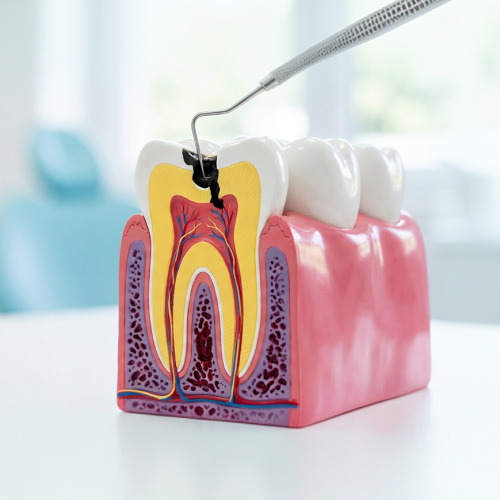
Root Canal Recovery, Pain, and What to Expect at Every Stage
Wondering what root canal recovery is really like? Learn what to expect, manage discomfort, and ensure quick healing. Book your consultation in Riverside today!
Read More
Root canals have an undeserved reputation for being agonizing — modern anesthesia and technique make the procedure far more tolerable than most patients expect. Understanding what you'll sense during the appointment, and how to protect your tooth afterward, makes the entire experience significantly less stressful.
For Riverside-area patients, the most common fear brought into the operatory is pain. That fear is largely outdated. According to Harvard Health, a root canal shouldn't be any more painful than having a cavity filling, thanks to today's anesthetics and refined techniques.
There is one important exception worth knowing: the "hot tooth." When a tooth has a severe acute infection, the tissue around the roots becomes acidic. That acidic environment chemically neutralizes standard lidocaine, making it harder to achieve complete numbness with a single injection. Endodontists are trained for exactly this scenario. Supplemental protocols — including buffered anesthesia (which raises the pH of the anesthetic solution to match tissue chemistry), intraosseous injections that deliver anesthetic directly into the bone near the root, and intraligamentary injections into the periodontal ligament space — are used to achieve complete numbness before any instrumentation begins. If you've ever heard someone say their root canal "wasn't numb enough," a severely infected tooth was very likely the reason — and it's a solvable problem, not an inevitability.
Beyond pain, there are non-pain sensory experiences that surprise patients and sometimes trigger anxiety. Knowing them in advance removes the alarm:
None of these indicate a problem. They're simply the texture of the procedure.
WebMD's overview of root canals outlines the core steps clearly. Here's how the appointment typically unfolds:
Contrary to a persistent myth, Harvard Health clarifies that the roots themselves are never removed — only the pulp tissue inside them.
This is where most post-treatment problems actually occur, and it rarely gets discussed. Once the canals are filled but before a permanent crown is placed — typically a window of one to three weeks — the tooth is structurally vulnerable in specific ways.
A root canal removes the pulp, which supplied moisture to the dentin. The tooth becomes more brittle. Meanwhile, a temporary filling seals the access opening, but temporary materials are porous over time. Bacteria from saliva can seep through this temporary seal (called coronal microleakage) and re-contaminate the canals — undoing the procedure entirely.
To protect the tooth during this window:
A Healthline overview of root canal pain and recovery reinforces that follow-through after the procedure is essential to long-term success.
Mild to moderate soreness for two to three days after a root canal is completely normal. The cleaning process creates minor tissue irritation around the root tip, and as the anesthetic wears off, you'll likely feel tenderness when biting. Over-the-counter ibuprofen or acetaminophen manages this well for most patients. MedlinePlus recommends an over-the-counter anti-inflammatory like ibuprofen for post-procedure discomfort.
Most patients return to normal activity the same day.
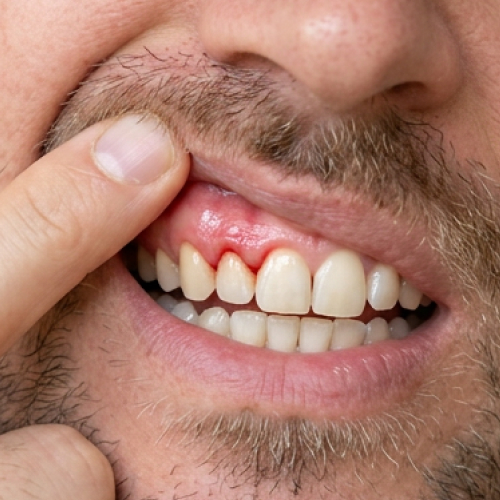
What's not normal: pain that intensifies after day three, visible swelling that spreads toward the jaw or neck, or a pimple-like bump returning on the gums. These signs can indicate incomplete canal cleaning or reinfection, and they warrant a prompt call to your endodontist — or a visit for a dental emergency. Healthline notes that recurring pain may mean additional cleaning sessions are needed — which is far better than leaving an infection untreated.
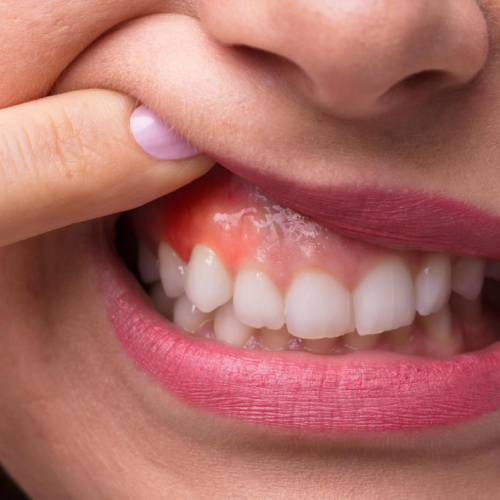
Signs of gum disease gingivitis around the treated area should also be reported to your provider, as they can complicate healing and long-term outcomes.
If you've been putting off an endodontic root canal because of fear or uncertainty, you now have a clearer picture of what the procedure actually involves. At Dental Specialists of Riverside, our team serves patients throughout Riverside and the surrounding Inland Empire with the kind of specialist-level care that makes a real difference in your comfort and outcome. Reach out to schedule a consultation — we're here to answer your questions and get you out of pain.
Medical disclaimer: This article is intended for informational purposes only and does not constitute professional dental or medical advice. Always consult a licensed dental provider regarding your specific condition and treatment options.
Fresh news from the dental world
Mon, Tues, Thur 9AM - 6PM
Weds 10AM - 7PM
Friday 8AM - 5PM
Sat & Sun Closed
Check out what our patients are saying in Riverside...


“What a Difference...”
“My wife and I recently decided to try teeth whitening here. Wow! What a difference. Thank you!”

“So Comfortable...”
"I have been coming here for years and I love this place. I feel so comfortable whenever I go into ortho. Everyone's really friendly! The ladies at the front desk are my favorite, they're always so helpful and always try their best to work around my schedule. Would definitely recommend!"

“Expert Care...”
“I have come a long way with all my dental issues. I’ve been able to take back control of my dental health because of the expert care I’ve received over the years at Dental Specialists of Riverside. I highly recommend this place because they won’t pressure you into stuff that you don’t need or that you are not ready for.”
..png)
“Never Disappointed...”
“I don’t have much time to waste, so I always get my whitening done by the good folks at Dental Specialists of Riverside. Never disappointed.”
“What a Difference...”
“My wife and I recently decided to try teeth whitening here. Wow! What a difference. Thank you!”
“So Comfortable...”
"I have been coming here for years and I love this place. I feel so comfortable whenever I go into ortho. Everyone's really friendly! The ladies at the front desk are my favorite, they're always so helpful and always try their best to work around my schedule. Would definitely recommend!"
Check out our accreditations, sources, and relationships in the wide world of dentistry...
..png)
..png)
..png)
Check us out and follow our Riverside, CA practice on social media...


..png)


