How Many Hours a Day Do You Really Need to Wear Invisalign Trays?
Wondering how long to wear Invisalign each day? Learn the daily wear rules, tray change schedule, and the 30-minute rule. Call our Riverside team today!
Read More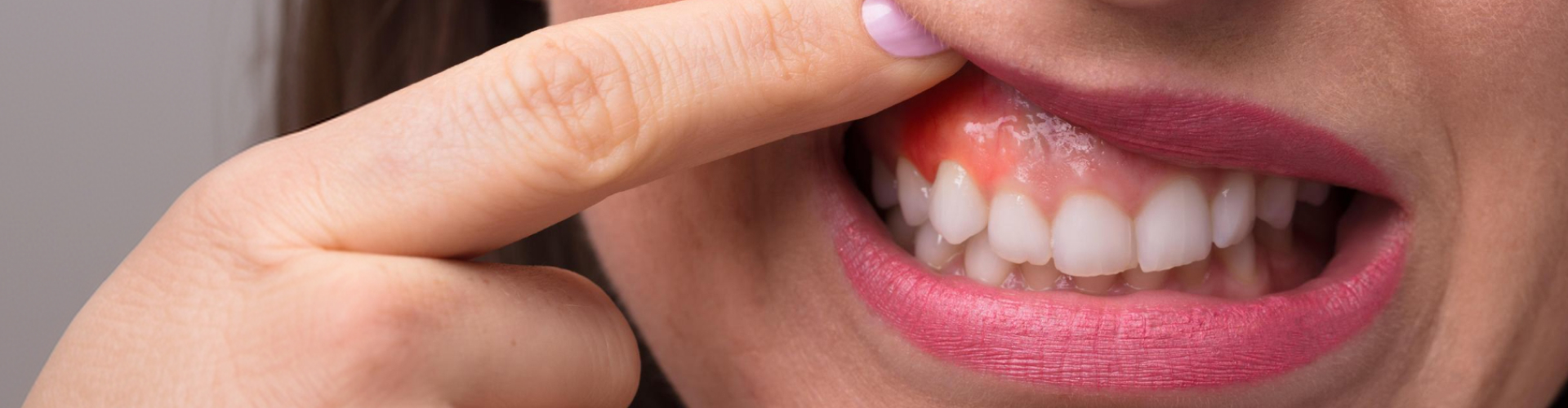
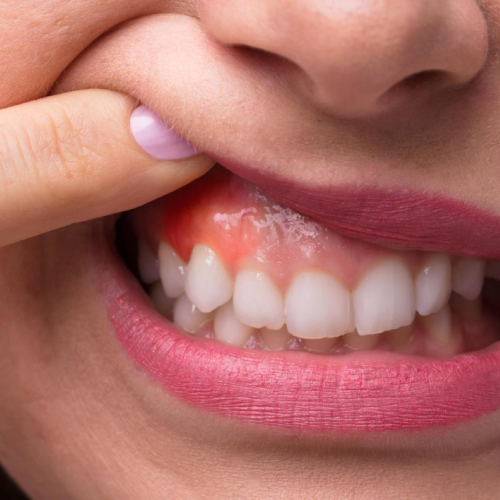
Stage 1 gum disease (gingivitis) is often painless and easy to miss — especially if you're a smoker or have darker gum pigmentation. Knowing the right visual and tactile signals, not just "red and bleeding," can help you catch it before it becomes irreversible periodontitis.
Nearly half of adults over 30 show signs of gum disease, and a significant portion have no idea. That's because the standard warning — "look for red, bleeding gums" — leaves out two major blind spots. For Riverside-area patients, understanding gum disease gingivitis in its earliest form is the key to stopping it before it becomes irreversible.
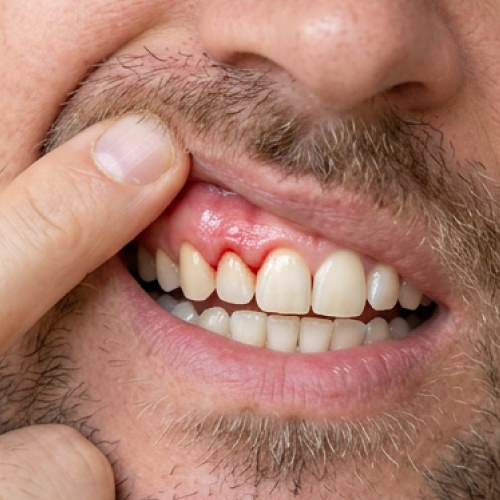
The stippling test. Healthy gums have a faintly textured, orange-peel surface called stippling. One of the earliest signs of gingivitis isn't color change — it's the loss of that texture. When gums become inflamed, stippling disappears and the tissue takes on a tight, glossy shine. The papillae (the triangular points of gum between teeth) also begin to look rounded and puffy rather than sharp and knife-edged. This change often precedes visible redness by weeks.
Pigmented gums and diverse skin tones. Most gum disease descriptions assume pink gums turn red. But many people naturally have melanin-pigmented gums — ranging from brown to deep purple. On these tissues, Stage 1 inflammation doesn't present as bright red. Instead, watch for a dull gray cast, a deepening to violet, or patchy hyperpigmentation that wasn't there before. The glossy-versus-stippled texture check is far more reliable across all skin tones than color alone.
The nicotine masking effect. This is where Stage 1 disease becomes genuinely dangerous for smokers and vapers. Nicotine is a vasoconstrictor — it tightens blood vessels and suppresses blood flow to gum tissue. The result? A smoker with active gingivitis often has pale, firm, almost leathery gums that don't bleed when brushed. The classic red-and-bleeding alarm never goes off. Instead, look for gum margin changes: has the edge of the gumline shifted slightly upward or pulled tighter against the tooth? Is the tissue unusually dense or fibrotic-feeling rather than supple? These are the checkpoints that matter for tobacco and nicotine users. According to NIDCR, smoking is the single most significant risk factor for gum disease — and it also delays healing, making early detection even more critical.
Most people treat flossing as a cleaning step. It's also a diagnostic one. The specific sensations and smells you notice while flossing can help you track whether Stage 1 gingivitis is holding steady or tipping into early periodontitis.
Provoked vs. spontaneous bleeding. Bleeding only when you press hard with floss? That's provoked bleeding — a classic Stage 1 signal. Bleeding that starts on its own, like noticing blood on your pillow, while eating soft bread, or without any brushing pressure? That's spontaneous bleeding, and it suggests the infection has progressed deeper below the gumline.
Floss catching or tearing. Healthy teeth have smooth subgingival surfaces. As calculus (hardened tartar) builds up beneath the gumline, it forms rough, shelf-like deposits. If your floss consistently snags, shreds, or catches in the same spot — and it's not a filling edge — that's a tactile signal worth noting. It means plaque has hardened into something a toothbrush and floss cannot remove at home.
The odor test. Fresh blood has a metallic, iron-like scent. If your floss carries a distinctly sulfurous or rotten smell — sometimes described as an egg or decay odor — that points to volatile sulfur compounds (VSCs) produced by anaerobic bacteria living in deep pockets. VSCs are a marker of more advanced bacterial activity than simple gingivitis. As Harvard Health notes, gingivitis is still reversible at early stages, but once the infection extends below the gumline, professional intervention becomes essential. A thorough cleaning and exam is often the first and most important step in reversing Stage 1 disease.
According to Healthline, periodontitis begins as inflammation and worsens in predictable stages. Here's how to distinguish where you stand:
Stage 1 — Gingivitis: Gums appear glossy (no stippling), may look slightly swollen at the margins, bleed only when provoked. No bone loss. Still fully reversible with professional cleaning and consistent home care.
Mild periodontitis: Gums begin to pull away from teeth, creating pockets. You may feel a subtle looseness when chewing. Bleeding becomes easier to provoke. Bone loss has begun — this stage is no longer reversible, only manageable.
Moderate periodontitis: Visible pus at the gumline, persistent bad breath, increasing sensitivity. Teeth may feel subtly different when biting. In some cases, a tooth extraction may become necessary if the tooth can no longer be saved.
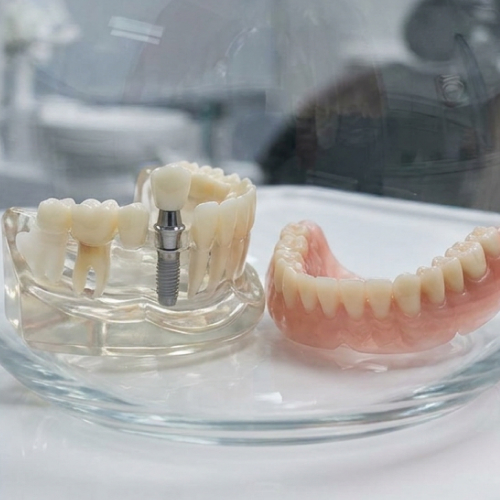
Advanced periodontitis: Teeth shift, feel loose, or develop noticeable gaps. Chewing becomes painful. Research published in StatPearls via NCBI confirms that this stage involves irreversible loss of the periodontal ligament and alveolar bone — the structures that anchor teeth in place. Patients who reach this stage may require dental implants to replace teeth that cannot be saved.
The key takeaway: Stage 1 is the only stage where complete reversal is possible. Everything after it is damage control.
Some patients move from gingivitis to periodontitis faster than others. Mouthhealthy.org from the ADA identifies several factors that increase both susceptibility and speed of progression:
If two or more of these apply to you, self-monitoring between dental visits becomes especially important. The floss audit and stippling check described above aren't substitutes for professional periodontal probing — but they give you real information between appointments.
If anything in this guide sounds familiar — glossy gums, floss that tears, sulfurous odor, or bleeding that seems to happen on its own — don't wait for a routine cleaning to ask about it. Dental Specialists of Riverside serves patients throughout Riverside and the Inland Empire with comprehensive periodontal evaluations. If you're experiencing pain or sudden changes in your gums, don't hesitate to seek a dental emergency evaluation right away. Stage 1 gum disease is completely reversible. The sooner it's addressed, the better your long-term outcome.
Medical disclaimer: This article is for informational purposes only and does not constitute professional dental or medical advice. Only a licensed dentist or periodontist can diagnose and treat gum disease. Please consult a qualified dental professional for evaluation and treatment.
Fresh news from the dental world


Mon, Tues, Thur 9AM - 6PM
Weds 10AM - 7PM
Friday 8AM - 5PM
Sat & Sun Closed
Check out what our patients are saying in Riverside...


“What a Difference...”
“My wife and I recently decided to try teeth whitening here. Wow! What a difference. Thank you!”

“So Comfortable...”
"I have been coming here for years and I love this place. I feel so comfortable whenever I go into ortho. Everyone's really friendly! The ladies at the front desk are my favorite, they're always so helpful and always try their best to work around my schedule. Would definitely recommend!"

“Expert Care...”
“I have come a long way with all my dental issues. I’ve been able to take back control of my dental health because of the expert care I’ve received over the years at Dental Specialists of Riverside. I highly recommend this place because they won’t pressure you into stuff that you don’t need or that you are not ready for.”
..png)
“Never Disappointed...”
“I don’t have much time to waste, so I always get my whitening done by the good folks at Dental Specialists of Riverside. Never disappointed.”
“What a Difference...”
“My wife and I recently decided to try teeth whitening here. Wow! What a difference. Thank you!”
“So Comfortable...”
"I have been coming here for years and I love this place. I feel so comfortable whenever I go into ortho. Everyone's really friendly! The ladies at the front desk are my favorite, they're always so helpful and always try their best to work around my schedule. Would definitely recommend!"
Check out our accreditations, sources, and relationships in the wide world of dentistry...
..png)
..png)
..png)
Check us out and follow our Riverside, CA practice on social media...

..png)


