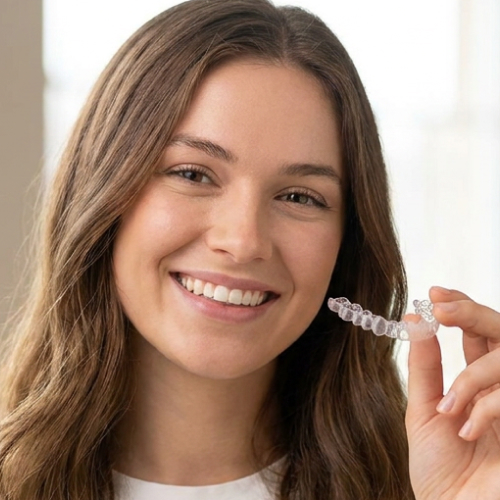
How Many Hours a Day Do You Really Need to Wear Invisalign Trays?
Wondering how long to wear Invisalign each day? Learn the daily wear rules, tray change schedule, and the 30-minute rule. Call our Riverside team today!
Read More
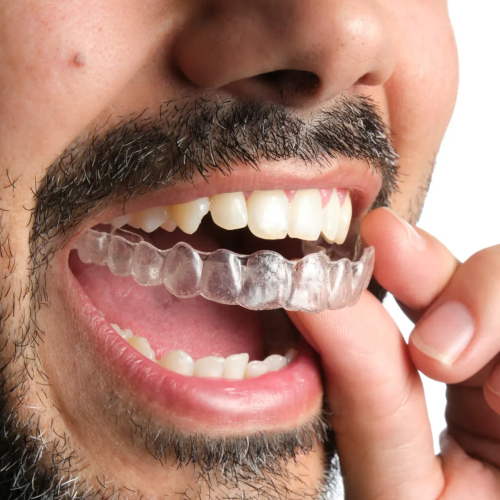
Most Invisalign patients need to wear their aligners 20–22 hours every day, leaving only a narrow window for meals and cleaning. Tray change schedules vary by the type of tooth movement involved — not just your overall treatment plan. And the popular advice to "brush immediately after eating" creates a real clinical tension that's worth understanding before you start.
Here's a conflict that catches patients off guard. For Riverside patients starting treatment, standard dental guidance recommends waiting about 30 minutes after eating before brushing, because acidic foods temporarily soften enamel and brushing too soon can wear it away. Yet Invisalign's 22-hour wear requirement leaves you only about 30–45 minutes per meal for everything — eating, cleaning, and reinserting your trays.
So what actually happens when you put trays back over unbrushed teeth?
The practical answer most providers use is a sequenced approach: rinse thoroughly with water or a fluoride mouthwash immediately after eating to neutralize pH and dislodge food debris, reinsert your aligners, then remove them 30–45 minutes later for a proper brush and floss session. This preserves your enamel by avoiding premature brushing while still protecting your wear-time compliance.
According to a DC Dentistry guide on the 30-minute rule, sealing aligners over teeth right after eating traps acid against enamel under the tray — which is precisely why the rinse step matters so much before reinsertion. Grouping meals into defined windows rather than grazing throughout the day makes this protocol far more manageable.
The takeaway: the 30-minute rule and the 22-hour rule aren't mutually exclusive. They just require a sequenced habit rather than trying to accomplish everything at once.
Most patients are told they're on either a 7-day or 14-day tray change schedule. What rarely gets explained is why some trays in the same treatment plan require more time than others — even for the same patient.
It comes down to biomechanics. Simple movements like minor crown tipping or small space closure place relatively low resistance on the periodontal ligament (PDL) and surrounding alveolar bone. These can often track well on 5–7 day cycles. But high-resistance movements — canine extrusion, premolar de-rotation, and root torque — demand that the bone actually remodel around the repositioned root. Rushing these trays risks incomplete movement, blunted roots, or orthodontic relapse.
This is one reason why orthodontists sometimes slow a schedule mid-treatment even when a patient has been perfectly compliant. It's not a setback. It's the biology of bone responding to sustained pressure, which Healthline's overview of how Invisalign works describes as the gradual, incremental pressure system behind every aligner sequence.
A practical implication: don't advance to the next tray based solely on the calendar. Use chewies to do a visual and tactile check — if the current tray still has visible gaps along the gumline or feels loose in areas where it shouldn't, the movement hasn't fully tracked yet. Staying an extra 2–3 days on that tray is clinically smarter than moving forward prematurely. This is also a good topic to raise at your next cleaning and exam appointment.
Life produces low-wear days. A long dinner, a wedding, a dental cleaning that runs long — these are real. The question patients rarely get a straight answer to is: how do you recover?
The general clinical principle is straightforward. If your daily wear drops below 20 hours, the PDL hasn't experienced enough sustained pressure to complete the intended movement for that tray. Rather than advancing on schedule, most orthodontists recommend extending the current tray by 24–48 hours for each significant low-wear day before moving forward. Abq Orthodontics recommends wearing Invisalign 20–22 hours per day to stay on track with your treatment timeline.
The key is not to guess. If you've had two or three days under 18 hours, do a chewie-assisted fit check before switching trays. If the aligner seats fully with no gaps, you may be fine to advance. If it doesn't seat cleanly, wear it another day or two.
WebMD notes that aligners can only shift teeth when they're actually in the mouth — consistent pressure is the mechanism, and anything that interrupts it extends treatment. Research referenced by Healthline on Invisalign treatment timelines reinforces that patients who remove aligners for more than two hours daily typically need longer overall treatment.
One more thing worth knowing: after active treatment ends, retainers become the mechanism that locks results in place. Healthline's guide to retainers after orthodontic treatment explains that without consistent retainer wear, teeth can migrate back toward their original positions — making post-treatment compliance just as important as the treatment itself. Patients who experience discomfort or shifting after treatment should be aware that a dental emergency evaluation may be warranted if something feels significantly off.
Adults are a growing share of clear aligner patients — according to WebMD, one in three orthodontic patients is an adult. Fully matured jawbones respond to aligner pressure more slowly than adolescent bone, which means adult treatment plans often run longer and may require more precision around wear-time compliance.
This isn't a reason to avoid treatment. It's a reason to take the 20–22 hour rule seriously from day one, understand that your tray schedule may shift based on movement type, and build the rinse-reinsert-delayed-brush habit early so it becomes automatic. Adults exploring their options may also want to consider teeth straightening braces as an alternative approach depending on their specific case.
If you're weighing Invisalign and want a clear picture of what your specific case would involve — including how long treatment might take and what your daily routine would look like — Dental Specialists of Riverside is here to help. Our team works with patients across Riverside and the broader Inland Empire to build treatment plans tailored to your bite, your schedule, and your goals. Whether you're interested in clear aligners or exploring aesthetic dentistry options more broadly, reach out to schedule a consultation.
Medical disclaimer: This article is for informational purposes only and does not constitute professional dental or medical advice. Always consult a licensed dental professional regarding your individual treatment needs.
Fresh news from the dental world


Mon, Tues, Thur 9AM - 6PM
Weds 10AM - 7PM
Friday 8AM - 5PM
Sat & Sun Closed
Check out what our patients are saying in Riverside...


“What a Difference...”
“My wife and I recently decided to try teeth whitening here. Wow! What a difference. Thank you!”

“So Comfortable...”
"I have been coming here for years and I love this place. I feel so comfortable whenever I go into ortho. Everyone's really friendly! The ladies at the front desk are my favorite, they're always so helpful and always try their best to work around my schedule. Would definitely recommend!"

“Expert Care...”
“I have come a long way with all my dental issues. I’ve been able to take back control of my dental health because of the expert care I’ve received over the years at Dental Specialists of Riverside. I highly recommend this place because they won’t pressure you into stuff that you don’t need or that you are not ready for.”
..png)
“Never Disappointed...”
“I don’t have much time to waste, so I always get my whitening done by the good folks at Dental Specialists of Riverside. Never disappointed.”
“What a Difference...”
“My wife and I recently decided to try teeth whitening here. Wow! What a difference. Thank you!”
“So Comfortable...”
"I have been coming here for years and I love this place. I feel so comfortable whenever I go into ortho. Everyone's really friendly! The ladies at the front desk are my favorite, they're always so helpful and always try their best to work around my schedule. Would definitely recommend!"
Check out our accreditations, sources, and relationships in the wide world of dentistry...
..png)
..png)
..png)
Check us out and follow our Riverside, CA practice on social media...

..png)


