Root Canal Recovery, Pain, and What to Expect at Every Stage
Wondering what root canal recovery is really like? Learn what to expect, manage discomfort, and ensure quick healing. Book your consultation in Riverside today!
Read More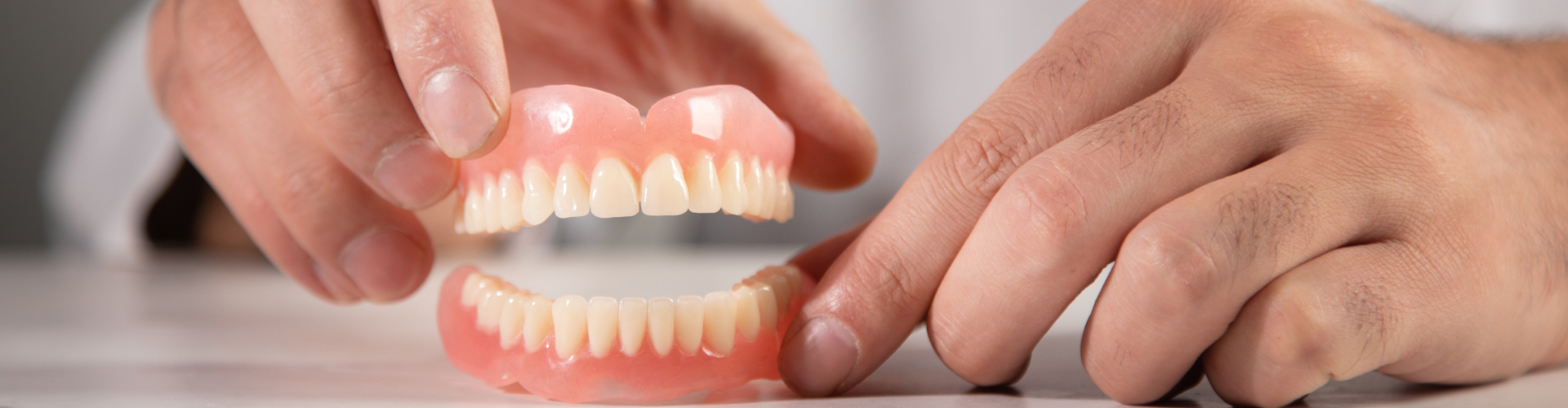
Flexible dentures work well for partial tooth replacement but face serious mechanical limitations for patients with no remaining teeth. Understanding why — and knowing how metal partials compare — helps you make a smarter, longer-lasting choice for your smile.
For Riverside-area patients, this is where most articles give a flat "no" and move on. But the reason matters, especially if you're trying to avoid the bulk of traditional acrylic plates.
The physics come down to something called the peripheral seal. According to the American Dental Association, complete dentures rely on precise fit against the palate and alveolar ridge to stay in place. That retention depends on a continuous, unbroken suction boundary — essentially, atmospheric pressure holding the plate against your gum tissue.
Flexible nylon materials are designed to flex. That's their appeal for partial dentures, where clasps grip remaining teeth for support. But when there are no teeth left to anchor the appliance, the denture must rely entirely on suction against soft tissue. Every time you chew, the nylon base flexes slightly — and that flex breaks the seal. The result is a denture that slips, rocks, and causes irritation far more than a rigid appliance would.
That doesn't mean comfort is out of reach. A practical workaround gaining clinical traction uses a rigid high-impact acrylic base — which maintains the peripheral seal — paired with thermoplastic flexible flanges or a silicone-based permanent soft liner along the tissue-bearing surfaces. The rigid base preserves suction. The soft liner addresses the comfort concerns that drive people toward flexible materials in the first place. It's a hybrid approach worth discussing with your prosthodontist.
As Healthline explains in its overview of false teeth, properly fitted dentures provide meaningful improvements to speech, eating, and confidence — but proper fit is the non-negotiable foundation of all of that.
Flexible dentures have genuine appeal: no visible metal clasps, lighter weight, and a translucent material that blends with gum tissue. For the right patient, they're a solid choice. But there are drawbacks that deserve honest attention.
Tissue-borne loading and ridge resorption. Metal partial frameworks use rigid occlusal rest seats — small metal extensions that sit in precisely prepared grooves on anchor teeth. These direct chewing forces down the long axis of the tooth root and into the supporting bone. This is tooth-borne support, and it protects both the anchor teeth and the underlying ridge.
Flexible partials have no rigid rests. They're entirely tissue-borne, meaning chewing pressure is absorbed by the gum tissue and alveolar ridge beneath the appliance. Under the forces generated during normal molar chewing, the flexible base sinks into the gums with each bite. Over time, this can cause gum disease around natural teeth and accelerate the very bone resorption patients are trying to prevent.
Repair and modification timelines. This one catches people off guard. If you lose an adjacent natural tooth after getting a flexible partial, adding a replacement tooth to the appliance isn't simple. Cold-cure acrylic — the standard chairside repair material — cannot chemically bond to nylon. That means the appliance typically must go back to a specialized injection-molding lab for reprocessing, a turnaround that can take one to two weeks. During that window, you're without teeth.
A cast-metal partial frame, by contrast, allows an in-office cold-cure acrylic addition or spot solder. A tooth extraction can often be performed and a tooth added to the existing partial within a 24-hour turnaround — far less social disruption and a much simpler process.
Longevity. Research published on NCBI indicates removable complete dentures may last an average of over ten years, with most lasting at least five. Flexible removable dentures, per Healthline's review of false teeth, typically last five to eight years before replacement is needed — a meaningful difference in long-term planning.
The comparison most people encounter focuses on aesthetics — pink flexible clasps versus visible metal hooks. That's worth knowing, but it's not the most important part of the decision.
When metal partials have the advantage: If you're replacing back teeth and need reliable chewing function, a cast-metal framework distributes force more safely. The rigid occlusal rests protect anchor teeth from lateral stress. The framework is also more dimensionally stable over time and far easier to modify if your dental situation changes. As WebMD notes in its overview of denture types, precision partial dentures with internal attachments offer a more natural-looking result without sacrificing structural integrity.
When flexible partials make sense: Anterior (front) tooth replacement, patients with metal allergies, or cases where the priority is cosmetic blending over heavy chewing function. Healthline's guide to partial dentures notes that people with anterior partial dentures often report high satisfaction, partly because the cosmetic improvement is immediately visible — and front teeth don't face the same chewing forces as molars.
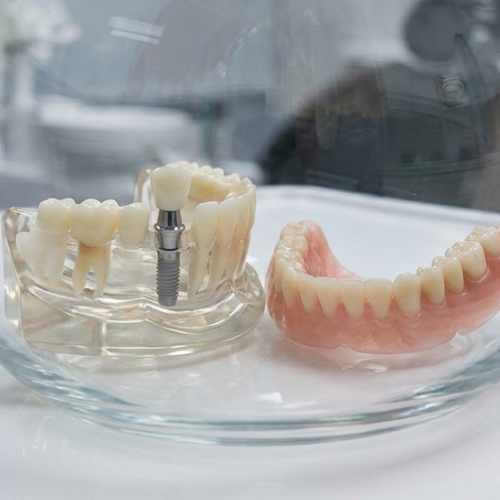
The honest answer: There's no universal winner. The right choice depends on where the missing teeth are, how many anchor teeth remain, your bite forces, and whether you're likely to lose additional teeth down the road. A prosthodontist can evaluate all of these variables and recommend an appliance designed to protect what you still have — not just replace what's gone. For patients missing one or more teeth, dental implants are another option worth exploring as a longer-term solution.
MouthHealthy from the American Dental Association reinforces that follow-up care and proper fit checks are essential regardless of which denture type you choose, since changes in the jaw and gum tissue affect how any appliance performs over time. Routine cleaning and exam appointments are a key part of maintaining that fit and catching any issues early.
Choosing between flexible partials, metal frameworks, or full dentures isn't a decision to make based on a single article. The mechanics matter, your remaining teeth matter, and your long-term oral health matters most of all.
Dental Specialists of Riverside serves patients throughout Riverside and the Inland Empire with the kind of specialist-level evaluation these decisions require. If you're weighing your options — whether that means cavity fillings, tooth replacement, or a full restorative plan — we're here to help you find a solution that fits your life — not just your mouth.
This article is for informational purposes only and does not constitute dental or medical advice. Always consult a licensed dental professional for diagnosis and personalized treatment recommendations.
Fresh news from the dental world
Mon, Tues, Thur 9AM - 6PM
Weds 10AM - 7PM
Friday 8AM - 5PM
Sat & Sun Closed
Check out what our patients are saying in Riverside...


“What a Difference...”
“My wife and I recently decided to try teeth whitening here. Wow! What a difference. Thank you!”

“So Comfortable...”
"I have been coming here for years and I love this place. I feel so comfortable whenever I go into ortho. Everyone's really friendly! The ladies at the front desk are my favorite, they're always so helpful and always try their best to work around my schedule. Would definitely recommend!"

“Expert Care...”
“I have come a long way with all my dental issues. I’ve been able to take back control of my dental health because of the expert care I’ve received over the years at Dental Specialists of Riverside. I highly recommend this place because they won’t pressure you into stuff that you don’t need or that you are not ready for.”
..png)
“Never Disappointed...”
“I don’t have much time to waste, so I always get my whitening done by the good folks at Dental Specialists of Riverside. Never disappointed.”
“What a Difference...”
“My wife and I recently decided to try teeth whitening here. Wow! What a difference. Thank you!”
“So Comfortable...”
"I have been coming here for years and I love this place. I feel so comfortable whenever I go into ortho. Everyone's really friendly! The ladies at the front desk are my favorite, they're always so helpful and always try their best to work around my schedule. Would definitely recommend!"
Check out our accreditations, sources, and relationships in the wide world of dentistry...
..png)
..png)
..png)
Check us out and follow our Riverside, CA practice on social media...


..png)


