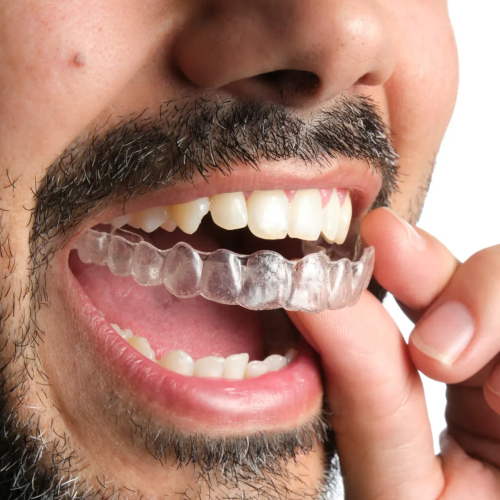
Can Invisalign Fix Severe Bite Issues and Overbites?
Can Invisalign fix severe overbites and bite issues? Learn how clear aligners treat complex dental cases and schedule your consultation in Riverside today!
Read More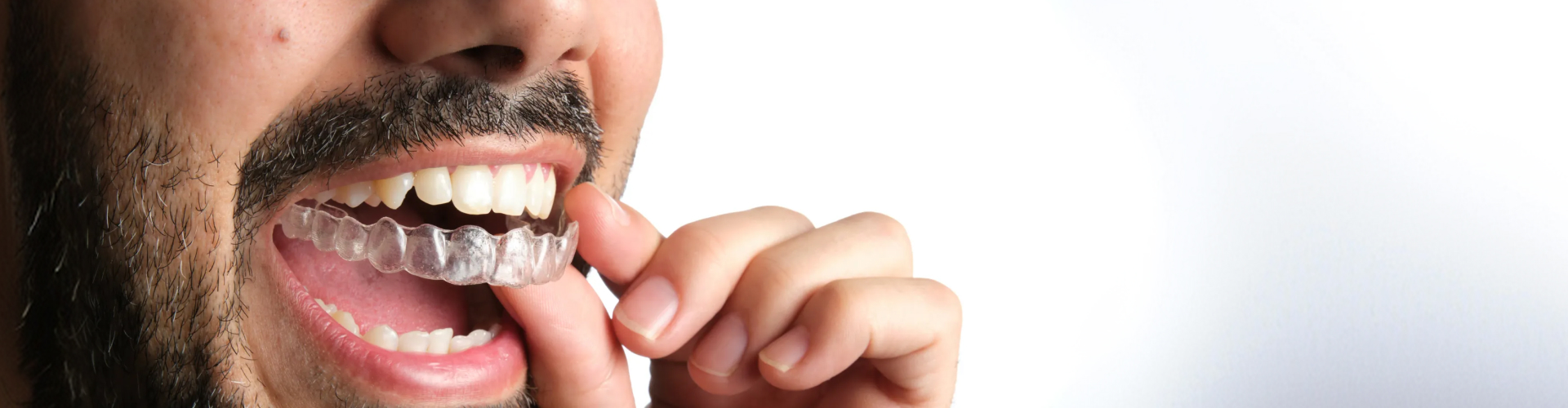
Invisalign works well for mild to moderate bite problems, but severe overbites and complex cases often require a more nuanced approach. Whether aligners alone can solve your bite depends on whether the problem is rooted in tooth position, jaw structure, or both. A specialist evaluation is the only reliable way to know.
For Riverside-area patients, most arrive thinking their overbite is simply a matter of crooked teeth. Sometimes that's true. Often, it isn't.
Orthodontists distinguish between two fundamentally different types of bite discrepancies. A dentoalveolar overbite means the teeth themselves are tilted or positioned incorrectly — the jaw bones are fine. A skeletal overbite means the upper and lower jaw bones are genuinely mismatched in position. This distinction is measured through cephalometric X-rays, where the ANB angle (the relationship between the upper and lower jaw) tells a specialist exactly what they're dealing with. An ANB angle above roughly 4–5 degrees signals a skeletal Class II discrepancy that goes beyond what aligners can reliably address on their own.
Why does this matter? Because Invisalign moves teeth through the alveolar bone — it shifts tooth position. It cannot reposition the jaw bones themselves. When a skeletal problem is treated with aligners alone, the result is called orthodontic camouflage: the teeth are tipped to mask the underlying jaw mismatch. This can look acceptable cosmetically while leaving functional issues unresolved, including TMJ strain and airway concerns.
According to Healthline, Invisalign can correct overbites, but the severity of the discrepancy directly determines how effective treatment will be. Moderate dentoalveolar overbites respond well. Severe skeletal cases may require orthognathic surgery or Temporary Anchorage Devices (TADs) in addition to aligners.
The takeaway: before committing to any aligner treatment for a significant bite issue, insist on a full diagnostic workup — not just photos, but X-rays with cephalometric analysis.
Here's where modern orthodontics has quietly moved beyond the old binary of "braces or aligners." Many patients with moderate-to-severe Class II bite issues are now treated with a hybrid protocol — a combination of a discrete sagittal correction appliance followed by Invisalign to finish the case.
One common approach uses a Carriere Motion 3D appliance. This small, fixed device is bonded to the upper teeth for roughly three to six months, working with elastics to jump the bite from a Class II relationship into a Class I (neutral) relationship. Once that sagittal correction is achieved, standard Invisalign trays take over to refine alignment and detailing. The result: the aligners are only asked to do what they do best — precise tooth movement — rather than being pushed to correct jaw relationships they weren't designed for.
A Healthline overview on overbite braces notes that traditional teeth straightening braces remain the standard of care for severe overbites because they provide constant, consistent force. Hybrid protocols borrow that biomechanical advantage for the most critical phase, then transition to the comfort and aesthetics of clear aligners.
This approach isn't widely discussed in generic aligner content, but it's increasingly common among orthodontic specialists. If a provider tells you your severe bite "can't be treated with Invisalign" without mentioning hybrid options, a second opinion from a specialist is worth pursuing.
Marketing for clear aligners is optimistic. Clinical reality is more nuanced.
Research and clinical experience show that aligners are highly predictable for certain movements — tipping, rotation of anterior teeth, and mild-to-moderate arch expansion. They are significantly less predictable for others. Posterior extrusion (moving back teeth downward to close an open bite) and root torque achieve roughly 30–45% accuracy with aligners alone, compared to 70% or higher with fixed appliances. This is why severe deep bites and open bites frequently require two or three refinement phases when treated exclusively with clear aligners.
To improve predictability in complex cases, orthodontists use specific auxiliaries:
As Healthline explains in its aligners vs. braces comparison, aligners cannot move severely crowded or malaligned teeth without additional support, and traditional braces allow more precise control for intricate adjustments.
A Healthline review of Invisalign effectiveness also acknowledges that existing research on aligner effectiveness has limitations in sample size and controls — meaning real-world outcomes depend heavily on case selection and provider expertise.
The practical implication: if your case involves a severe deep bite, significant open bite, or root torque requirements, ask your provider specifically which auxiliaries are planned and how many refinement phases they typically see for cases like yours. For patients who also have underlying decay or structural concerns, issues like cavity fillings or a tooth crown may need to be addressed before or alongside orthodontic treatment.
Invisalign is genuinely effective — for the right cases. Mild to moderate overbites with a dentoalveolar cause, minor crowding, and spacing issues are well within its capabilities. Severe skeletal discrepancies, complex torque requirements, and significant vertical problems are where specialist judgment and hybrid approaches become essential.
The question isn't really "Invisalign or braces." It's whether your specific diagnosis calls for one, the other, or a combination — and that answer requires a specialist, not a marketing brochure.
If you're weighing Invisalign for a bite issue, the most important step is a proper evaluation by an orthodontic specialist — not a general assessment, but a full diagnostic workup with cephalometric analysis. A thorough cleaning and exam is also a smart starting point to ensure your overall oral health is in good shape before beginning any orthodontic treatment.
Dental Specialists of Riverside serves patients throughout Riverside and the Inland Empire, offering specialist-level diagnosis and treatment planning for complex bite cases. Schedule a consultation and get a clear picture of which approach will actually work for your smile.
Medical disclaimer: This article is for informational purposes only and does not constitute professional dental or medical advice. Always consult a licensed dental specialist for diagnosis and treatment recommendations specific to your situation.
Fresh news from the dental world




Mon, Tues, Thur 9AM - 6PM
Weds 10AM - 7PM
Friday 8AM - 5PM
Sat & Sun Closed
Check out what our patients are saying in Riverside...


“What a Difference...”
“My wife and I recently decided to try teeth whitening here. Wow! What a difference. Thank you!”

“So Comfortable...”
"I have been coming here for years and I love this place. I feel so comfortable whenever I go into ortho. Everyone's really friendly! The ladies at the front desk are my favorite, they're always so helpful and always try their best to work around my schedule. Would definitely recommend!"

“Expert Care...”
“I have come a long way with all my dental issues. I’ve been able to take back control of my dental health because of the expert care I’ve received over the years at Dental Specialists of Riverside. I highly recommend this place because they won’t pressure you into stuff that you don’t need or that you are not ready for.”
..png)
“Never Disappointed...”
“I don’t have much time to waste, so I always get my whitening done by the good folks at Dental Specialists of Riverside. Never disappointed.”
“What a Difference...”
“My wife and I recently decided to try teeth whitening here. Wow! What a difference. Thank you!”
“So Comfortable...”
"I have been coming here for years and I love this place. I feel so comfortable whenever I go into ortho. Everyone's really friendly! The ladies at the front desk are my favorite, they're always so helpful and always try their best to work around my schedule. Would definitely recommend!"
Check out our accreditations, sources, and relationships in the wide world of dentistry...
..png)
..png)
..png)
Check us out and follow our Riverside, CA practice on social media...


..png)