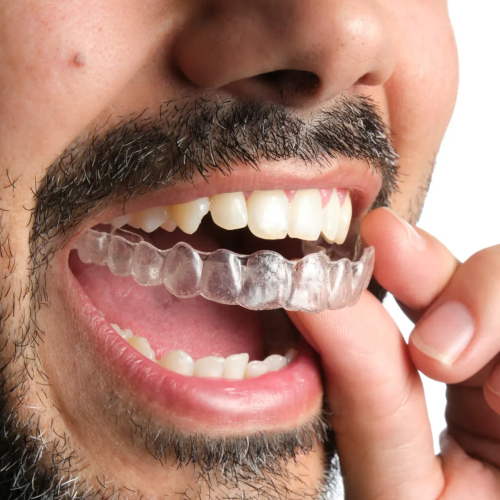
Can Invisalign Fix Severe Bite Issues and Overbites?
Can Invisalign fix severe overbites and bite issues? Learn how clear aligners treat complex dental cases and schedule your consultation in Riverside today!
Read More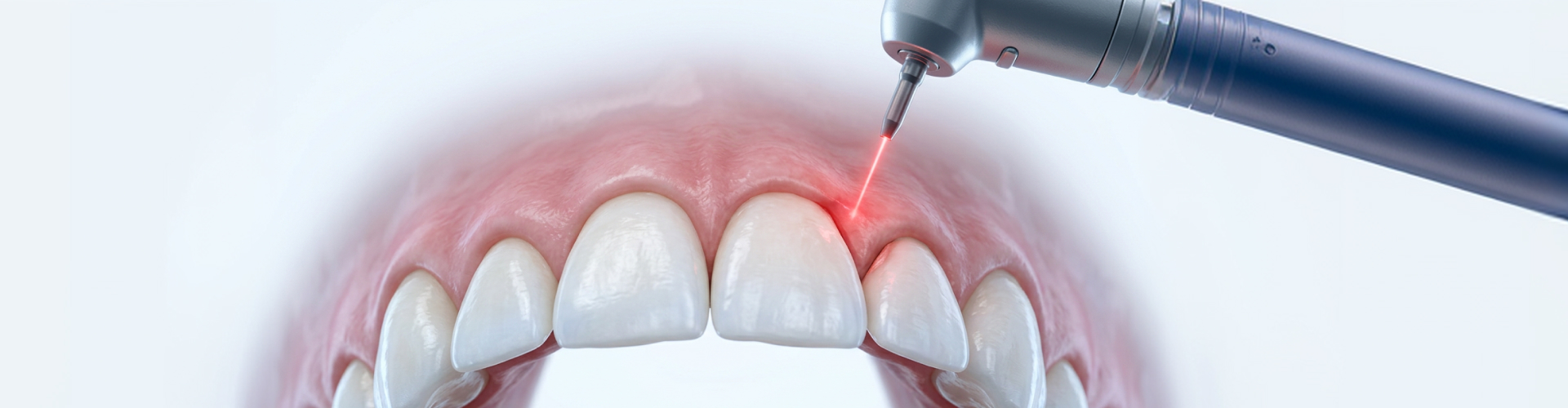
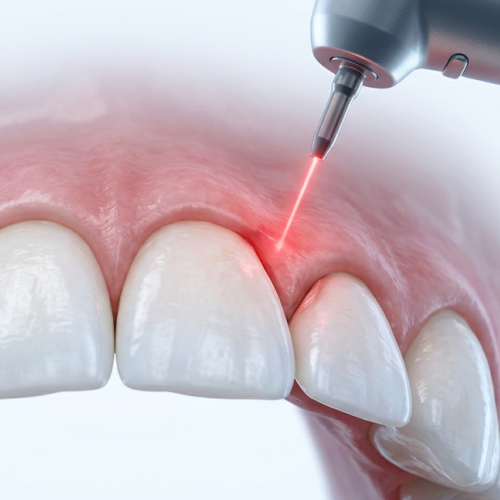
Gum contouring reshapes your gumline for cosmetic or medical reasons, but whether it's "worth it" depends on more than appearance alone. There are clinical factors — including hidden bone anatomy and potential downstream restorative needs — that most patients never hear about before booking the procedure.
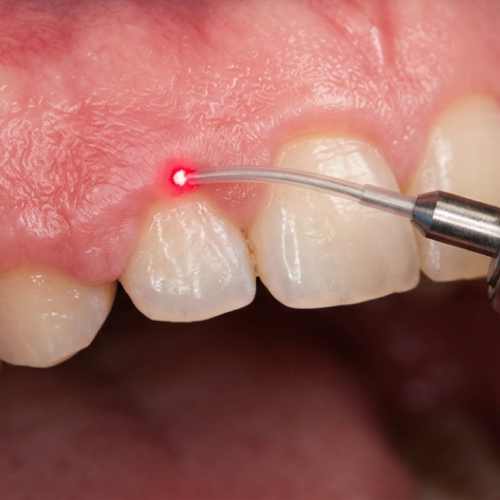
Most patients assume gum contouring is straightforward: a laser trims excess tissue, the gumline lifts, and the smile transforms. That's true in some cases. But there's a clinical reality that rarely gets discussed in waiting rooms.
For Riverside patients, your gums don't exist in isolation. They maintain a biological attachment zone between the base of the gumline and the underlying bone crest — sometimes called the supracrestal tissue attachment, historically referred to as biologic width. This zone typically spans roughly 2–3 millimeters of healthy tissue. When a soft-tissue laser removes surface gum without accounting for how close the bone sits beneath it, the body interprets the new gumline as a violation of that protected space.
The result? The tissue grows back. Chronic inflammation follows. The patient returns months later wondering why their results disappeared.
This is why patients with a thick alveolar bone crest often require osseous crown lengthening — a procedure that reshapes the underlying bone — rather than a simple laser gingivectomy. According to Healthline, gum contouring involves either removing excess gum tissue or restoring receded tissue, and the approach depends heavily on the individual's anatomy. Skipping a proper evaluation of bone position is where outcomes go wrong.
At a specialist practice, this distinction gets assessed before any laser touches your gums. A cleaning and exam that includes a thorough periodontal assessment is often the right first step before any contouring procedure is planned.
Here's a gap in almost every gum contouring conversation: what your teeth actually look like once the gums are lifted.
The crown of each tooth is covered in enamel — white, hard, and reflective. But below the anatomical crown, at the neck of the tooth, the root surface is covered in cementum. Cementum is naturally darker and yellower than enamel. When gum contouring lifts the gumline even a millimeter or two past the enamel-cementum junction, that darker root surface becomes visible.
Patients who didn't expect this sometimes find themselves needing cosmetic bonding or porcelain veneers shortly after healing — not because the gum procedure failed, but because the tooth's natural anatomy didn't cooperate with the new gumline.
A WebMD overview of cosmetic dentistry notes that procedures like veneers and bonding are often used to address color and shape irregularities — exactly the kind of corrections that may follow gum contouring if root surfaces are exposed. Before committing to gum reshaping, a thorough evaluation of your tooth morphology, existing restorations, and crown margin positions is essential. This is how you avoid surprise follow-up procedures.
The vague answer you'll find most places: "it depends." Here's a more useful breakdown.
Gum contouring flips from cosmetic to potentially covered when specific clinical criteria are present. These include periodontal pocket depths of 4mm or greater, drug-induced gingival overgrowth (gingival hyperplasia) from medications like amlodipine, cyclosporine, or phenytoin, or chronic subgingival food impaction that causes recurring infection.
In billing terms, the distinction often comes down to CDT codes. D4210 covers gingivectomy or gingivoplasty involving four or more teeth per quadrant; D4211 covers one to three teeth per quadrant. When the procedure is documented as treatment for periodontal disease rather than aesthetic improvement, insurance coverage becomes possible. Patients dealing with gum disease gingivitis may find that their treatment qualifies under these medical criteria.
As Healthline explains in its gingivectomy overview, dentists may recommend gum removal to prevent further damage and improve access for cleaning when disease is present — a medically grounded indication. WebMD's gum contouring guide reinforces that procedures like pocket reduction and crown lengthening may incorporate gum reshaping with a medical rationale. Speaking with your insurance provider before scheduling — and ensuring your provider documents the clinical findings accurately — is the step most patients skip.
When gum contouring is approached correctly, the benefits are real and often lasting.
A balanced gumline has an outsized effect on smile aesthetics. Teeth that appear too short due to excess gum tissue can look dramatically different once the correct proportions are restored. Healthline's overview of gummy smile treatments notes that for patients with altered passive eruption or excess gingival display, results from a well-executed gingivectomy tend to be long-lasting or even permanent.
Beyond appearance, there are functional benefits. Overgrown gum tissue creates pockets where bacteria accumulate. Reshaping those areas reduces that bacterial reservoir, making daily cleaning more effective. For patients with gum recession, tissue grafting — a related procedure — protects exposed roots from sensitivity and decay before the damage compounds. In some cases, a tooth crown may also be recommended to restore a tooth whose structure has been compromised by prolonged gum issues.
Laser gum surgery, as detailed by Healthline, offers additional advantages in recovery: lasers cauterize as they cut, reduce bleeding, and lower infection risk compared to traditional scalpel techniques. For eligible patients, the combination of lasting cosmetic improvement and reduced periodontal risk makes gum contouring genuinely worthwhile — provided the evaluation is thorough. Patients interested in a complete smile transformation may also want to explore aesthetic dentistry options that can complement gum reshaping results.
Whether your concern is cosmetic symmetry, a gummy smile, or gum tissue affecting your oral health, the answer starts with a proper clinical evaluation — not a general estimate.
Dental Specialists of Riverside serves patients throughout Riverside and the greater Inland Empire with specialist-level periodontal care. If you're also considering dental implants or other restorative work alongside your gum treatment, our team can coordinate a comprehensive plan. Contact us to schedule a consultation and get a clear picture of what gum contouring can — and can't — do for your specific anatomy.
Medical disclaimer: This article is intended for informational purposes only and does not constitute medical or dental advice. Always consult a licensed dental professional for diagnosis and treatment recommendations specific to your situation.
Fresh news from the dental world




Mon, Tues, Thur 9AM - 6PM
Weds 10AM - 7PM
Friday 8AM - 5PM
Sat & Sun Closed
Check out what our patients are saying in Riverside...


“What a Difference...”
“My wife and I recently decided to try teeth whitening here. Wow! What a difference. Thank you!”

“So Comfortable...”
"I have been coming here for years and I love this place. I feel so comfortable whenever I go into ortho. Everyone's really friendly! The ladies at the front desk are my favorite, they're always so helpful and always try their best to work around my schedule. Would definitely recommend!"

“Expert Care...”
“I have come a long way with all my dental issues. I’ve been able to take back control of my dental health because of the expert care I’ve received over the years at Dental Specialists of Riverside. I highly recommend this place because they won’t pressure you into stuff that you don’t need or that you are not ready for.”
..png)
“Never Disappointed...”
“I don’t have much time to waste, so I always get my whitening done by the good folks at Dental Specialists of Riverside. Never disappointed.”
“What a Difference...”
“My wife and I recently decided to try teeth whitening here. Wow! What a difference. Thank you!”
“So Comfortable...”
"I have been coming here for years and I love this place. I feel so comfortable whenever I go into ortho. Everyone's really friendly! The ladies at the front desk are my favorite, they're always so helpful and always try their best to work around my schedule. Would definitely recommend!"
Check out our accreditations, sources, and relationships in the wide world of dentistry...
..png)
..png)
..png)
Check us out and follow our Riverside, CA practice on social media...


..png)