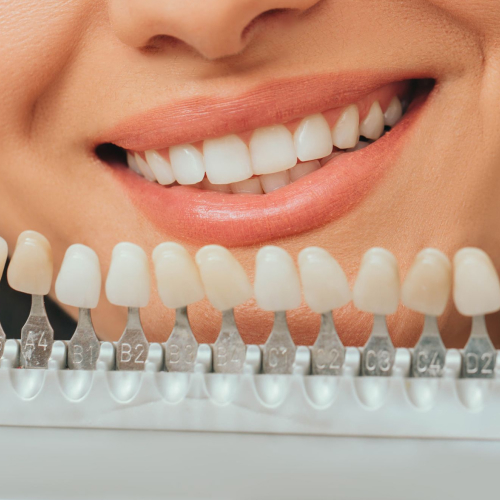
Dental Veneers: How Many Visits, How Much Enamel, and What to Expect
Curious about dental veneers? Learn how many visits it takes, how much enamel is removed, and what to expect. Schedule your consultation in Riverside today!
Read More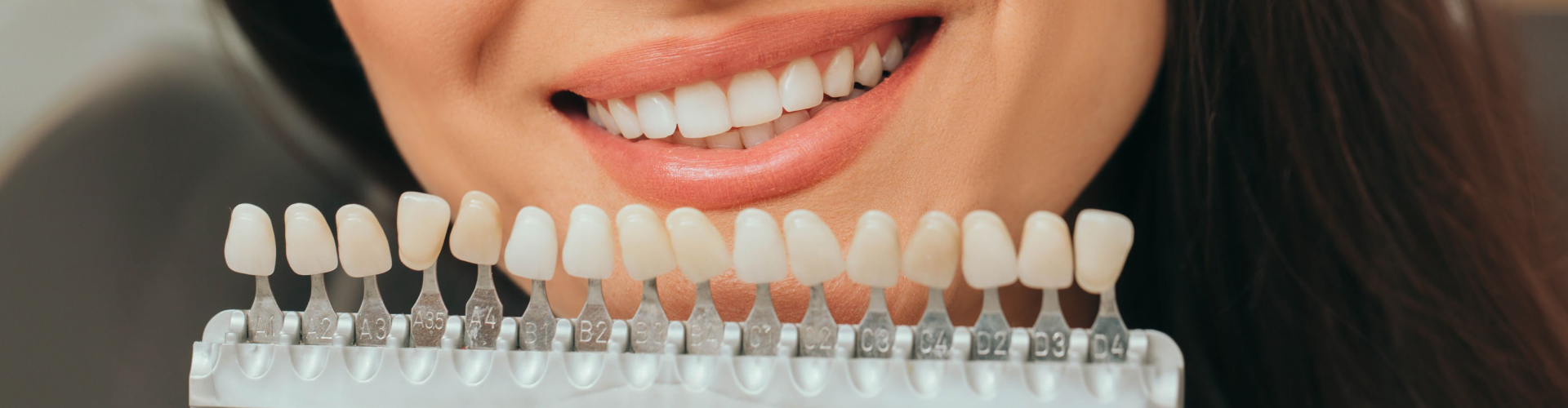
Getting dental veneers typically requires two to three visits, though the number varies by veneer type and individual tooth position. Enamel removal is highly customized — some teeth may need none at all. Understanding what happens between visits helps you avoid unexpected sensitivity and discomfort.
For Riverside-area patients, most articles tell you a dentist removes "about 0.5mm of enamel" for veneers and leave it there. That number is technically accurate on average — but it misses something important that genuinely changes the patient experience.
Enamel removal is mapped tooth by tooth, based on where each tooth sits in your arch. Your cosmetic dentist first establishes the target smile line — essentially the ideal final position of every tooth. From there, they work backward. A tooth that already sits slightly forward (proclined) may need more reduction to bring the veneer into alignment. A tooth angled slightly inward (retroclined) might need zero preparation at all, making it a true no-prep candidate.
According to Healthline, no-prep veneers can sometimes be designed and placed without removing any enamel, while traditional porcelain veneers typically involve grinding roughly half a millimeter from the front surface. The practical result: across a set of six to eight veneers, some teeth may receive 0.7mm of reduction while neighboring teeth receive 0.0mm.
This matters because enamel removal is irreversible. Research published in PMC confirms that preparation should remain within enamel whenever possible, since bonding to enamel produces stronger, longer-lasting results than bonding to exposed dentin. Your dentist's goal is always to remove as little as necessary — the arch form of your specific smile dictates exactly how much that is.
Here's what the standard "three-visit process" explanation skips over: the 10 to 14 days between preparation and final placement can be uncomfortable if you're not prepared for it.
After enamel is removed, your dentist bonds temporary acrylic veneers over the prepared teeth. Acrylic conducts temperature differently than porcelain. It's also spot-bonded rather than fully cemented, which means small gaps can develop at the margins. Saliva, cold air, and temperature changes reach the underlying dentin through these gaps — a phenomenon called micro-leakage — triggering sharp, sudden sensitivity that can feel alarming even though it's temporary.
To minimize this phase:
A WebMD overview of dental veneers notes that temporary veneers are standard while permanent ones are fabricated at the lab. Knowing that sensitivity during this window is normal — not a sign something went wrong — makes it far easier to manage.
Patients are often told the placement appointment is the final step. In practice, a follow-up bite adjustment visit is frequently necessary — and skipping it can lead to a specific type of pain that mimics a much more serious problem.
When a veneer is even a fraction of a millimeter too thick, the opposing tooth contacts it prematurely with every bite. The porcelain itself doesn't hurt — but the periodontal ligament (the thin layer of connective tissue anchoring each tooth to its socket) absorbs that excess force repeatedly. This is called occlusal trauma. The resulting ache is deep, throbbing, and can begin three to seven days after placement, long after the anesthetic has worn off and the appointment feels like a distant memory.
Patients searching "throbbing pain after veneers" are often experiencing exactly this. The good news: a brief follow-up appointment where the dentist polishes down the high spot — a painless, five-minute procedure — resolves it completely.
According to the American Dental Association's MouthHealthy resource, patients should tell their dentist if their bite doesn't feel right after veneer placement so it can be corrected. Don't wait and hope it resolves on its own. Ligament bruising from an uncorrected high spot can linger for weeks. If you're ever unsure whether your discomfort constitutes a dental emergency, it's always better to call your dentist and ask.
The honest answer depends on which type of veneer you choose.
Porcelain veneers follow a structured sequence: a consultation visit, a preparation and impression visit, and a placement visit — with the optional (but often necessary) bite adjustment follow-up. That's two to four appointments total.
Composite veneers are applied directly to the tooth surface in a single session. Your dentist sculpts the composite resin by hand, cures it with a special light, and polishes it — all in one visit. As Healthline explains in its composite veneer overview, this makes composite a faster option, though porcelain tends to offer superior stain resistance and longevity over time.
No-prep veneers (including brands like Lumineers) require minimal or no enamel removal and can sometimes be placed in fewer visits. However, they're not suitable for every case — particularly where significant color masking or alignment correction is needed. Patients who need more substantial tooth movement may want to explore teeth straightening braces as part of their overall treatment plan.
The visit count also scales with complexity. A single chipped tooth may be addressed in one or two appointments. A full smile makeover involving eight or more teeth will require more planning time, more precise shade matching, and careful occlusal evaluation across multiple visits. Comprehensive aesthetic dentistry planning often includes a thorough cleaning and exam to ensure your teeth and gums are healthy before any cosmetic work begins. Your dentist will outline a clear timeline during your initial consultation.
If you're considering veneers and want a clear, honest picture of what the process looks like for your specific teeth, Dental Specialists of Riverside is here to help. Our team serves patients throughout Riverside and the greater Inland Empire, and we're happy to walk through candidacy, veneer type options, and what your individual treatment timeline would look like. We also offer pro teeth whitening for patients who want to brighten their smile before or alongside their veneer treatment. Reach out to schedule a consultation.
This article is intended for informational purposes only and does not constitute professional dental or medical advice. Always consult a licensed dental professional for guidance specific to your oral health situation.
Fresh news from the dental world


Mon, Tues, Thur 9AM - 6PM
Weds 10AM - 7PM
Friday 8AM - 5PM
Sat & Sun Closed
Check out what our patients are saying in Riverside...


“What a Difference...”
“My wife and I recently decided to try teeth whitening here. Wow! What a difference. Thank you!”

“So Comfortable...”
"I have been coming here for years and I love this place. I feel so comfortable whenever I go into ortho. Everyone's really friendly! The ladies at the front desk are my favorite, they're always so helpful and always try their best to work around my schedule. Would definitely recommend!"

“Expert Care...”
“I have come a long way with all my dental issues. I’ve been able to take back control of my dental health because of the expert care I’ve received over the years at Dental Specialists of Riverside. I highly recommend this place because they won’t pressure you into stuff that you don’t need or that you are not ready for.”
..png)
“Never Disappointed...”
“I don’t have much time to waste, so I always get my whitening done by the good folks at Dental Specialists of Riverside. Never disappointed.”
“What a Difference...”
“My wife and I recently decided to try teeth whitening here. Wow! What a difference. Thank you!”
“So Comfortable...”
"I have been coming here for years and I love this place. I feel so comfortable whenever I go into ortho. Everyone's really friendly! The ladies at the front desk are my favorite, they're always so helpful and always try their best to work around my schedule. Would definitely recommend!"
Check out our accreditations, sources, and relationships in the wide world of dentistry...
..png)
..png)
..png)
Check us out and follow our Riverside, CA practice on social media...


..png)