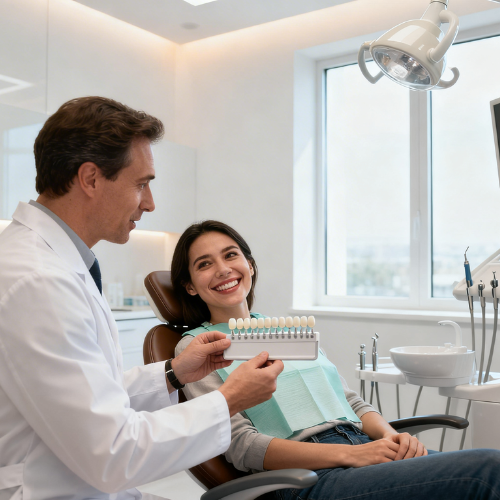
Do Veneers Stain Over Time? What You Should Know Before Getting One
Wondering if veneers stain over time? Dental Specialists of Riverside explains what causes discoloration and how to protect your smile in Riverside, CA.
Read More
Are you tired of constantly battling bad breath, gum disease, and tooth decay? It’s time to take your oral health to the next level with full mouth debridement. This simple yet effective procedure is a key step in maintaining good oral health, and it’s a must-have for anyone who wants to keep their teeth and gums in top condition.
But what exactly is full mouth debridement, and why is it so important? In this blog post, we’ll be diving into the nitty-gritty details of full mouth debridement, explaining what it is, why it’s necessary, and how it can benefit you.
The short answer is no. While a deep cleaning is an important part of maintaining good oral health, it is not the same as a full mouth debridement. A deep cleaning focuses on removing plaque and tartar buildup from the gumline and between the teeth, while a full mouth debridement is a more comprehensive procedure that not only removes plaque and tartar, but also addresses other oral health issues such as periodontal disease and tooth decay.
A full mouth debridement is a more in-depth procedure that is designed to give your mouth a thorough clean and help prevent the buildup of harmful bacteria. It typically involves a combination of scaling, root planing, and other techniques to remove plaque, tartar, and other debris from your teeth and gums. In some cases, a full mouth debridement may also involve the use of antibiotics or other medications to help fight infections and promote healing.
**While a deep cleaning is an important step in maintaining good oral health, a full mouth debridement is a more comprehensive procedure that can help address a wider range of oral health issues. **If you’re looking for a way to take your oral health to the next level, a full mouth debridement may be just what you need.
First and foremost, a full mouth debridement typically begins with a thorough examination of your mouth by your dental professional. This examination will help determine the extent of any plaque and tartar buildup, as well as any other oral health issues that may be present.
Once the examination is complete, your dental professional will begin the debridement process. This typically involves scaling, which involves removing plaque and tartar buildup from the surface of your teeth. Scaling may be done using manual tools, such as scalers and curettes, or using ultrasonic instruments.
In addition to scaling, your dental professional may also perform root planing. This involves removing plaque and tartar buildup from the roots of your teeth, which can help prevent the development of gum disease.
Other techniques that may be used during a full mouth debridement include curettage, which involves removing any loose or damaged tissue from your gums, and irrigation, which involves flushing your mouth with an antiseptic solution to help kill harmful bacteria.
The debridement process can take anywhere from a few hours to several appointments, depending on the extent of the plaque and tartar buildup and the presence of any other oral health issues. However, the end result is worth it: a clean, healthy mouth that is free from harmful bacteria and other oral health problems.
In conclusion, a full mouth debridement is a comprehensive procedure that involves a variety of techniques to remove plaque and tartar buildup, address oral health issues, and promote a healthy mouth. If you’re looking for a way to take your oral health to the next level, a full mouth debridement may be just what you need.
One of the biggest concerns that people have about a full mouth debridement is whether or not it will be painful. After all, who wants to undergo a procedure that’s going to leave them in agony?
The good news is that a full mouth debridement is generally not painful. While some people may experience some discomfort during the procedure, it is typically minimal and can be easily managed with over-the-counter pain relievers or local anesthesia.
In fact, many people find that the benefits of a full mouth debridement far outweigh any potential discomfort. By removing plaque and tartar buildup and addressing other oral health issues, a full mouth debridement can help improve your overall oral health and leave you with a cleaner, fresher mouth.
Additionally, your dental professional will take steps to ensure that you are as comfortable as possible during the debridement process. This may include using local anesthesia, providing you with a numbing gel, or offering you a sedative to help you relax.
In conclusion, a full mouth debridement is a comprehensive procedure that is designed to help improve your oral health and keep your mouth free from harmful bacteria and other oral health issues. Whether you’re struggling with gum disease, tooth decay, or simply want to maintain good oral hygiene, a full mouth debridement can help.
By removing plaque and tartar buildup, addressing other oral health issues, and promoting a healthy mouth, a full mouth debridement can help you achieve the healthy, vibrant smile that you deserve. And with the right care and maintenance, the benefits of a full mouth debridement can last for years to come.
So, if you’re ready to take your oral health to the next level, why not schedule an appointment with our clinic today? Our experienced dental professionals will be happy to help you determine if a full mouth debridement is right for you, and will work with you to develop a personalized treatment plan that meets your unique needs and goals.
At our clinic, we understand the importance of good oral health, and we are committed to helping our patients achieve and maintain a healthy, vibrant smile. So, why wait? Schedule your appointment today and start enjoying the many benefits of full mouth debridement!
Fresh news from the dental world





Mon, Tues, Thur 9AM - 6PM
Weds 10AM - 7PM
Friday 8AM - 5PM
Sat & Sun Closed
Check out what our patients are saying in Riverside...


“What a Difference...”
“My wife and I recently decided to try teeth whitening here. Wow! What a difference. Thank you!”

“So Comfortable...”
"I have been coming here for years and I love this place. I feel so comfortable whenever I go into ortho. Everyone's really friendly! The ladies at the front desk are my favorite, they're always so helpful and always try their best to work around my schedule. Would definitely recommend!"

“Expert Care...”
“I have come a long way with all my dental issues. I’ve been able to take back control of my dental health because of the expert care I’ve received over the years at Dental Specialists of Riverside. I highly recommend this place because they won’t pressure you into stuff that you don’t need or that you are not ready for.”
..png)
“Never Disappointed...”
“I don’t have much time to waste, so I always get my whitening done by the good folks at Dental Specialists of Riverside. Never disappointed.”
“What a Difference...”
“My wife and I recently decided to try teeth whitening here. Wow! What a difference. Thank you!”
“So Comfortable...”
"I have been coming here for years and I love this place. I feel so comfortable whenever I go into ortho. Everyone's really friendly! The ladies at the front desk are my favorite, they're always so helpful and always try their best to work around my schedule. Would definitely recommend!"
Check out our accreditations, sources, and relationships in the wide world of dentistry...
..png)
..png)
..png)
Check us out and follow our Riverside, CA practice on social media...


..png)