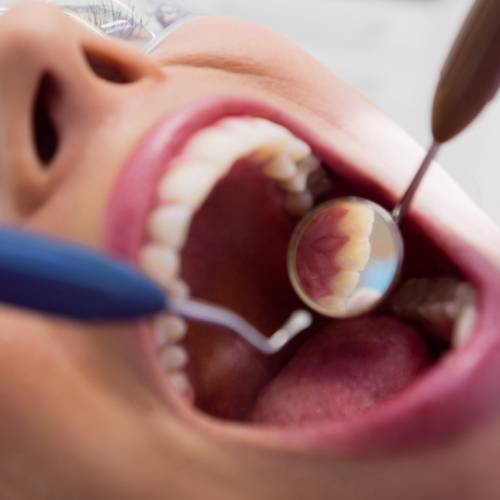
Why Timing Matters for Cavity Fillings: How Decay Progresses
How cavities progress from enamel to pulp, why painless decay still needs treatment, and when timing matters at Dental Specialists of Riverside.
Read More
Most people do not panic the first time they notice a little pink in the sink. They assume they brushed too hard, skipped flossing for a few days, or just irritated their gums somehow. That is exactly why gum problems can sneak up on people.
Periodontal disease often starts quietly. At first, it may look like mild gum irritation or occasional bleeding. But over time, it can move deeper below the gumline and begin affecting the tissues and bone that support your teeth. What starts as something small can turn into something much more serious if it is ignored.
The good news is that early action can make a real difference. If you catch gum disease in its earlier stages, treatment is usually simpler, more comfortable, and more effective.
At Dental Specialists of Riverside, we help patients understand what is happening with their gums and what to do next. If you have noticed bleeding, swelling, tenderness, or gum recession, it is worth paying attention.
Periodontal disease is a gum infection caused by plaque and bacteria building up around the teeth and under the gumline. When that buildup is not removed properly, the gums become inflamed. In the beginning, this stage is called gingivitis.
Gingivitis is the earliest form of gum disease. It can cause red or puffy gums, bleeding when brushing or flossing, tenderness along the gumline, and bad breath that keeps coming back. At this stage, the damage is usually still reversible with professional care and better home habits.
If gingivitis is left untreated, it can develop into periodontitis. That is when the infection moves deeper and begins to damage the structures holding your teeth in place. This can lead to gum recession, deep pockets around the teeth, loose teeth, bone loss, changes in your bite, and tooth loss in more advanced cases. That is why bleeding gums should never be brushed off as normal.
One reason periodontal disease is so common is that it does not always cause dramatic pain in the beginning. Many people expect a serious dental problem to hurt right away, but gum disease often works quietly in the background.
You might notice small changes over time, such as:
Your gums bleed more easily. This is one of the earliest warning signs and one of the most ignored.
Your breath never feels fresh for long. Persistent bad breath can be linked to bacteria trapped below the gumline.
Your teeth look longer than they used to. That may actually be gum recession exposing more of the tooth.
Food gets stuck more often. As gums pull away, spaces can form around the teeth.
Your gums feel sore or look swollen. Inflammation is your body’s signal that something is not right.
These signs may seem minor on their own, but together they can point to a bigger issue.
This is one of the most common questions patients ask, and it is a good one. When you start brushing more carefully, flossing consistently, and following your dentist’s instructions, you want to know whether it is actually working.
In many cases, improving gingivitis looks like a gradual reduction in inflammation. You may notice that your gums bleed less when you brush or floss, the swelling starts to go down, your gums look pinker and less irritated, your mouth feels cleaner and fresher, and tenderness around the gumline begins to improve.
Those are encouraging signs, but here is the important part: you cannot always judge gum health by appearance alone.
Sometimes the surface looks better while plaque and tartar are still sitting below the gumline. That is why home care matters, but professional evaluation matters too. A dental exam can show whether the inflammation is truly improving and whether your gum pockets are getting healthier.
If your gums are still bleeding regularly after improving your routine, or if they seem to get a little better and then flare up again, it may be time for a deeper cleaning or a closer look.
People often hope there is one perfect toothpaste that can solve gum disease, but the truth is a little more nuanced.
The best toothpaste for periodontal disease is usually one that helps reduce plaque, supports gum health, and fits your specific needs. Some people do well with a fluoride toothpaste for cavity protection and sensitivity. Others may benefit from an antibacterial toothpaste or a product recommended by their dentist.
In general, a toothpaste for gum health should help with:
That said, toothpaste alone does not treat periodontal disease. It supports your routine, but it does not remove hardened tartar below the gumline or treat deeper infection.
Think of toothpaste as one piece of the plan, not the whole plan. Even a great product cannot do much if brushing is rushed, flossing is inconsistent, or bacteria are already sitting deep under the gums.
If you already have periodontitis, the right toothpaste can help maintain your oral health, but professional treatment is usually still needed.
This question sounds more intimidating than it needs to. Periodontal procedures are simply treatments used to manage gum disease, reduce infection, and protect the structures that support your teeth.
The right treatment depends on how advanced the condition is.
Common periodontal procedures may include:
The goal of these procedures is not just to clean your teeth. It is to stop progression, protect your bone and gums, and help you keep your natural teeth as long as possible.
The best thing you can do is act early. Gum disease is much easier to manage before it causes major damage. Waiting usually means more inflammation, more tissue breakdown, and more complex treatment later.
If you are noticing symptoms, here are a few smart next steps:
Do not ignore bleeding gums. Bleeding is a sign of inflammation, not something your mouth should be doing regularly.
Stay consistent with brushing and flossing. Good home care helps, even if professional treatment is also needed.
Keep your dental visits on schedule. Regular exams and cleanings help catch changes early.
Get evaluated if something feels off. Bad breath, gum recession, swelling, tenderness, or loose teeth are all worth checking.
Periodontal disease is common, but it is not something you should just live with. With the right care, many patients can get their gum health back on track and avoid more serious problems down the road.
If you have noticed changes in your gums, schedule an appointment with Dental Specialists of Riverside. Our team can evaluate your symptoms, explain what is going on, and recommend the right treatment to help protect your smile.
Fresh news from the dental world




Mon, Tues, Thur 9AM - 6PM
Weds 10AM - 7PM
Friday 8AM - 5PM
Sat & Sun Closed
Check out what our patients are saying in Riverside...


“What a Difference...”
“My wife and I recently decided to try teeth whitening here. Wow! What a difference. Thank you!”

“So Comfortable...”
"I have been coming here for years and I love this place. I feel so comfortable whenever I go into ortho. Everyone's really friendly! The ladies at the front desk are my favorite, they're always so helpful and always try their best to work around my schedule. Would definitely recommend!"

“Expert Care...”
“I have come a long way with all my dental issues. I’ve been able to take back control of my dental health because of the expert care I’ve received over the years at Dental Specialists of Riverside. I highly recommend this place because they won’t pressure you into stuff that you don’t need or that you are not ready for.”
..png)
“Never Disappointed...”
“I don’t have much time to waste, so I always get my whitening done by the good folks at Dental Specialists of Riverside. Never disappointed.”
“What a Difference...”
“My wife and I recently decided to try teeth whitening here. Wow! What a difference. Thank you!”
“So Comfortable...”
"I have been coming here for years and I love this place. I feel so comfortable whenever I go into ortho. Everyone's really friendly! The ladies at the front desk are my favorite, they're always so helpful and always try their best to work around my schedule. Would definitely recommend!"
Check out our accreditations, sources, and relationships in the wide world of dentistry...
..png)
..png)
..png)
Check us out and follow our Riverside, CA practice on social media...


..png)