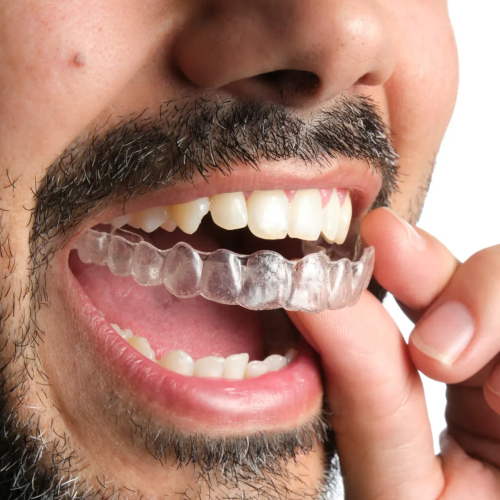
Can Invisalign Fix Severe Bite Issues and Overbites?
Can Invisalign fix severe overbites and bite issues? Learn how clear aligners treat complex dental cases and schedule your consultation in Riverside today!
Read More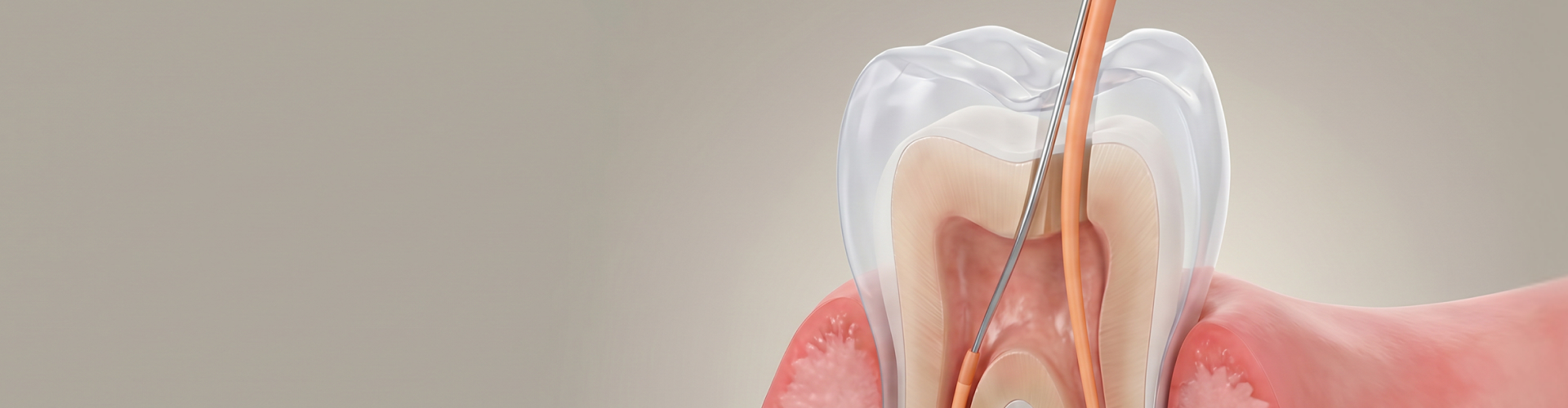
Pulp capping is a minimally invasive alternative to root canal therapy that preserves living tooth pulp — but its success depends heavily on your age, the capping material used, and the quality of the final restoration placed over it. Not every patient is a candidate, and knowing the difference could save you from needing two procedures instead of one.
For Riverside-area patients, most patients searching online find a generic success rate and assume it applies to them. It often doesn't — and age is the biggest reason why.
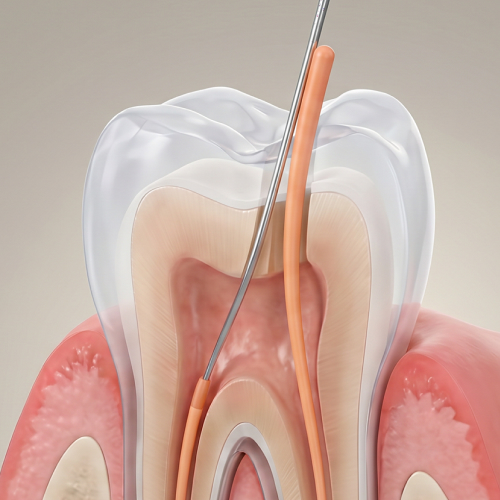
Dental pulp is a living tissue. In younger patients, it has robust vascularity, strong immune response, and a high capacity to form a protective "dentin bridge" over the capped exposure. That bridge is essentially the tooth healing itself. In patients under 25, this regenerative response is vigorous, and a Healthline overview notes that direct pulp capping is often most effective in younger individuals precisely because of this healing advantage.
As the pulp ages, it becomes progressively fibrotic and calcified. Blood supply diminishes. The very cells responsible for dentin bridge formation — odontoblasts — are fewer in number and less responsive. By the time a patient is past 50, the odds of a successful pulp cap shift considerably. Research published in PMC confirms that patient age is a significant prognostic factor, with younger patients consistently showing higher long-term success rates.
This has a direct clinical consequence. For an older patient with deep caries, proceeding with a pulp cap that is likely to fail means undergoing a root canal anyway — weeks or months later, often with more inflammation present. In that scenario, the endodontic root canal performed immediately at the time of exposure may actually produce a better long-term outcome.
At Dental Specialists of Riverside, candidacy for pulp capping is evaluated individually. Age alone doesn't disqualify a patient, but it is weighed carefully alongside pulp vitality status, bleeding behavior at the exposure site, and overall tooth health.
The short answer: success rates are high when conditions are right. A systematic review and meta-analysis found an overall 83% success rate for direct pulp capping in permanent teeth when performed on asymptomatic vital pulps with normal apical conditions.
However, the capping material matters significantly. Calcium hydroxide has been the traditional choice for decades, but its long-term performance is limited by solubility and poor sealing ability. Mineral trioxide aggregate (MTA) outperforms it substantially. A practice-based randomized clinical trial comparing CaOH and MTA found a 24-month failure probability of 31.5% for calcium hydroxide versus 19.7% for MTA — a statistically significant difference. Newer materials like Biodentine show comparable results to MTA while offering easier handling.
Pulp capping is also not inherently painful. The procedure is performed under local anesthesia, and postoperative discomfort is generally mild. According to a systematic review on postoperative pain published in PMC, full pulpotomy — a closely related vital pulp procedure — actually produced fewer cases of moderate postoperative pain than single-visit root canal therapy. Direct pulp capping, being even less invasive, typically follows a similar or more comfortable recovery pattern.
The key prerequisites for a successful outcome are consistent across the literature: the pulp must be vital and non-inflamed, bleeding must be controllable, and the exposure site should be small. Teeth showing signs of irreversible pulpitis are not appropriate candidates — root canal therapy remains the correct treatment in those cases.
Here's what most online articles miss entirely: the capping material is not the strongest predictor of pulp cap success. The final restoration placed on top of it is.
This concept — the coronal seal — refers to how completely bacteria are excluded from the tooth after treatment. Even microscopic gaps in the final filling (microleakage) allow oral bacteria to track down to the pulp, destroying it silently over months. A long-term retrospective study evaluating direct pulp capping outcomes found that the quality of the coronal restoration was the primary variable influencing success across every follow-up period, including 20- and 35-year evaluations.
This means a perfectly placed MTA cap can still fail if it's covered with a temporary filling or a poorly bonded restoration. Immediate, permanent bonding with a well-sealed composite or tooth crown is not optional — it's foundational to the procedure working at all.
Patients should ask their provider directly: Will I receive a permanent restoration today, or a temporary one? If the answer is temporary, ask when the permanent restoration will be placed and what the protocol is for protecting the pulp in the interim. A bacteria-tight seal needs to be established as soon as possible.
Not all pulp cap failures announce themselves with pain. The pulp can undergo asymptomatic necrosis — the nerve dies quietly, and a slow infection begins consuming surrounding bone without obvious symptoms. By the time a patient notices something is wrong, a significant lesion may have formed.
This is why follow-up monitoring is not optional. The ADA News reports that pulp necrosis following pulp capping is correlated with specific risk factors including exposure size, capping material, and patient age — all of which must be tracked over time.
A responsible monitoring protocol includes:
At home, patients should watch for subtle warning signs: slight darkening of the tooth, unusual pressure sensitivity when chewing, or lingering sensitivity to temperature that was not present before. None of these symptoms are definitively diagnostic, but any of them warrants an earlier appointment. If symptoms escalate suddenly, it is important to treat the situation as a dental emergency and seek prompt care.
The monitoring timeline matters because the highest risk window for failure is within the first five years — particularly the first two. Catching a failing pulp cap early preserves the option for a straightforward root canal before bone loss or abscess formation complicates the picture.
Not every exposed pulp needs a root canal — but not every exposed pulp is a candidate for capping, either. The decision depends on your age, pulp status, and how quickly a bacteria-tight seal can be achieved.
Dental Specialists of Riverside serves patients throughout Riverside and the broader Inland Empire. Our team evaluates each case individually, using current diagnostic tools and materials to determine whether vital pulp therapy or root canal treatment gives you the best long-term outcome. We also offer cavity fillings, dental implants, and comprehensive cleaning and exam services to support your long-term oral health. Contact us to schedule a consultation.
Medical disclaimer: This article is for informational purposes only and does not constitute dental or medical advice. Always consult a licensed dental professional for diagnosis and treatment recommendations specific to your condition.
Fresh news from the dental world




Mon, Tues, Thur 9AM - 6PM
Weds 10AM - 7PM
Friday 8AM - 5PM
Sat & Sun Closed
Check out what our patients are saying in Riverside...


“What a Difference...”
“My wife and I recently decided to try teeth whitening here. Wow! What a difference. Thank you!”

“So Comfortable...”
"I have been coming here for years and I love this place. I feel so comfortable whenever I go into ortho. Everyone's really friendly! The ladies at the front desk are my favorite, they're always so helpful and always try their best to work around my schedule. Would definitely recommend!"

“Expert Care...”
“I have come a long way with all my dental issues. I’ve been able to take back control of my dental health because of the expert care I’ve received over the years at Dental Specialists of Riverside. I highly recommend this place because they won’t pressure you into stuff that you don’t need or that you are not ready for.”
..png)
“Never Disappointed...”
“I don’t have much time to waste, so I always get my whitening done by the good folks at Dental Specialists of Riverside. Never disappointed.”
“What a Difference...”
“My wife and I recently decided to try teeth whitening here. Wow! What a difference. Thank you!”
“So Comfortable...”
"I have been coming here for years and I love this place. I feel so comfortable whenever I go into ortho. Everyone's really friendly! The ladies at the front desk are my favorite, they're always so helpful and always try their best to work around my schedule. Would definitely recommend!"
Check out our accreditations, sources, and relationships in the wide world of dentistry...
..png)
..png)
..png)
Check us out and follow our Riverside, CA practice on social media...


..png)