
How Many Hours a Day Do You Really Need to Wear Invisalign Trays?
Wondering how long to wear Invisalign each day? Learn the daily wear rules, tray change schedule, and the 30-minute rule. Call our Riverside team today!
Read More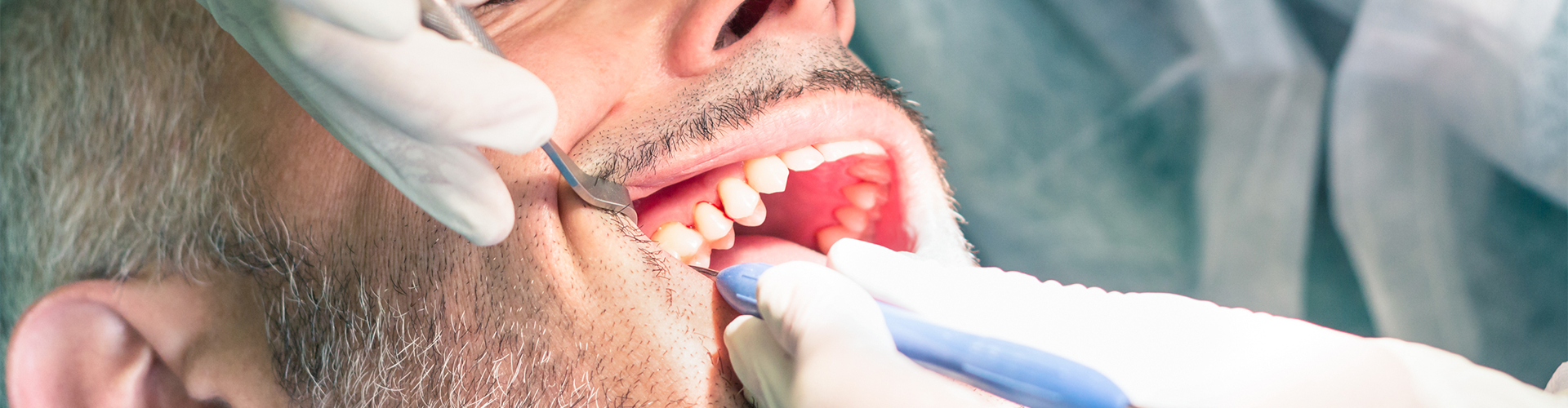
Let’s face it, most of us think of dental cleanings as quick polish-and-go appointments. But sometimes, your mouth needs more than a routine cleaning. If it's been years since your last dental visit or your gums are inflamed and tender, your dentist might recommend something called a gross debridement. And no, it’s not as scary as it sounds.
Gross debridement is often the first step to bringing your smile back to health when buildup has gotten out of hand. Think of it as a “reset” for your teeth and gums; a deep cleaning that clears the way for more targeted care. At Dental Specialists of Riverside, we perform gross debridement procedures with precision and care to help patients get back on track without judgment. Let’s break down what this procedure involves, when it’s necessary, and how it sets the foundation for long-term oral health.
What is a gross debridement cleaning? Gross debridement is a type of dental cleaning used when there's excessive plaque and tartar buildup that makes it hard to assess the teeth and gums. It’s often recommended for patients who haven’t had a dental cleaning in years or have signs of gum disease. Unlike a standard cleaning, which targets visible plaque and polish, gross debridement is more like excavation. We’re clearing out the thick layer of buildup that’s hardened and hiding the true condition of your mouth.
Here’s how it works: We start with a comprehensive exam, followed by a cleaning using ultrasonic tools that break up and wash away heavy deposits. This isn’t just about aesthetics, it allows us to actually see your teeth and gums again and determine what level of treatment you’ll need next.
If you’re experiencing bleeding, swollen gums, or bad breath that doesn’t go away, this procedure might be the first step toward healing.
Why can’t I get a regular cleaning instead? We get it, gross debridement doesn’t sound like a spa day. But it’s essential in situations where a regular cleaning simply won’t do the job. If the plaque is too thick or hard, it prevents the hygienist from reaching the actual tooth surface.
Doing a standard cleaning on top of thick calculus (hardened plaque) is like trying to dust a table that’s covered in cement. You’ll barely make a dent and won’t get an accurate view of what’s happening underneath.
By removing the bulk of the buildup first, we’re able to safely and thoroughly clean your teeth in future appointments, assess gum health, and check for cavities or other problems hidden by tartar.
What happens after a gross debridement cleaning? Gross debridement isn’t a one-and-done treatment. Think of it as part one of your care plan. After the debridement is complete and we can properly examine your gums and teeth, we’ll be able to recommend your next steps, whether that’s a deep cleaning (also called scaling and root planing), periodontal therapy, or simply returning to regular cleanings every six months.
In some cases, patients are surprised to find out their gums bounce back faster than expected. In others, gum disease might require more consistent follow-up care. Either way, the goal is to restore oral health, not just make your teeth look clean on the surface.
At Dental Specialists of Riverside, we make sure you’re clear on every step of the journey. We’ll talk through your options, explain what each phase means, and make sure you feel confident and cared for.
The truth is, most people don’t know they need one until their dental exam. But there are signs you can look out for:
These are all signs of advanced plaque and tartar buildup, and possibly early stages of gum disease. In these cases, a gross debridement may be the best first step to help restore your oral health.
This is a common concern, especially for patients with gum inflammation. The good news is that we use numbing gel or local anesthetic if needed, and our ultrasonic tools are gentle yet effective.
You might feel pressure or vibration, but we take care to keep you as comfortable as possible. After the procedure, it’s normal to experience a bit of sensitivity or soreness, but that usually fades within a couple of days. We’ll also share tips on what to eat, how to care for your mouth afterward, and when to return for your next appointment.
Most patients feel a huge difference once the buildup is gone, like your teeth can breathe again.
Gum disease doesn’t appear overnight, it usually develops when plaque and tartar are left untreated. Gross debridement helps us remove those irritants before they do permanent damage. In patients who already have gum disease, it allows us to assess the extent and begin the appropriate treatment plan.
In other words, debridement gives us a clean slate to work with and puts you in the best position to reverse early-stage gum issues.
Usually, we don’t combine both in one visit. Gross debridement comes first because we can’t do scaling and root planing (deep cleaning) properly if plaque and tartar are still blocking access to the roots of the teeth.
Instead, we remove the bulk first, then bring you back for a more detailed cleaning once your gums are ready and your teeth are visible. That way, your treatment is more precise, effective, and less traumatic for the tissues.
Recovery is usually quick. Most people feel mild tenderness for a day or two, especially if their gums were inflamed. We recommend eating soft foods, avoiding very hot or cold drinks, and rinsing with warm salt water if needed.
You’ll also want to stick to a good brushing and flossing routine to keep the progress going. Once the inflammation goes down, your gums may tighten back around your teeth and feel more secure.
Ready to hit reset on your oral health? If it’s been a while since your last dental visit or your mouth just doesn’t feel quite right, don’t wait for things to get worse. Gross debridement can help us uncover what’s really going on and get you on the path to a cleaner, healthier smile.
Schedule your appointment today with the caring team at Dental Specialists of Riverside. We’ll meet you where you are, and help you get where you want to be.
Fresh news from the dental world


Mon, Tues, Thur 9AM - 6PM
Weds 10AM - 7PM
Friday 8AM - 5PM
Sat & Sun Closed
Check out what our patients are saying in Riverside...


“What a Difference...”
“My wife and I recently decided to try teeth whitening here. Wow! What a difference. Thank you!”

“So Comfortable...”
"I have been coming here for years and I love this place. I feel so comfortable whenever I go into ortho. Everyone's really friendly! The ladies at the front desk are my favorite, they're always so helpful and always try their best to work around my schedule. Would definitely recommend!"

“Expert Care...”
“I have come a long way with all my dental issues. I’ve been able to take back control of my dental health because of the expert care I’ve received over the years at Dental Specialists of Riverside. I highly recommend this place because they won’t pressure you into stuff that you don’t need or that you are not ready for.”
..png)
“Never Disappointed...”
“I don’t have much time to waste, so I always get my whitening done by the good folks at Dental Specialists of Riverside. Never disappointed.”
“What a Difference...”
“My wife and I recently decided to try teeth whitening here. Wow! What a difference. Thank you!”
“So Comfortable...”
"I have been coming here for years and I love this place. I feel so comfortable whenever I go into ortho. Everyone's really friendly! The ladies at the front desk are my favorite, they're always so helpful and always try their best to work around my schedule. Would definitely recommend!"
Check out our accreditations, sources, and relationships in the wide world of dentistry...
..png)
..png)
..png)
Check us out and follow our Riverside, CA practice on social media...

..png)


