Do Veneers Stain Over Time? What You Should Know Before Getting One
Wondering if veneers stain over time? Dental Specialists of Riverside explains what causes discoloration and how to protect your smile in Riverside, CA.
Read More
Written by Dr. David Won, DDS
Medically Reviewed by Dr. Chad Hawkins, DDS | Orthodontist
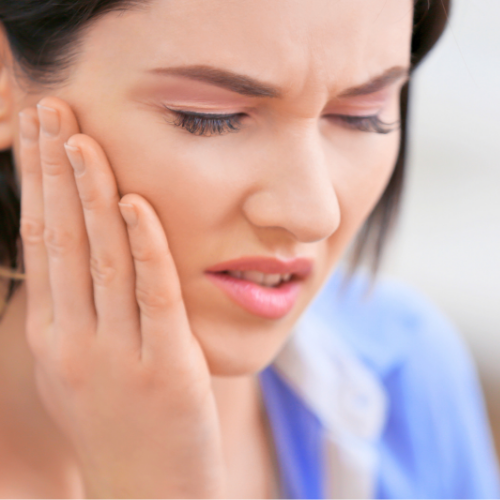
Here's something most of my patients in Riverside don't realize until they're already dealing with jaw pain: you can be grinding your teeth all night without feeling a thing when you wake up. No morning pain, no obvious symptoms. But the damage? It's happening.
I had a patient last month who came in complaining about headaches and neck tension—not jaw pain, interestingly enough. Examining her, the signs were all there: worn enamel, tight masseter muscles. Classic sleep bruxism affecting her temporomandibular joint, even though she'd wake up feeling fine. Here's the thing: your jaw doesn't get a break while you sleep, and those repetitive muscle contractions strain delicate joint structures whether you're aware of it or not.
At Dental Specialists of Riverside, we see this pattern constantly—patients who don't connect their symptoms to what's happening at night. And I get it. How can something hurt your jaw if you don't even know you're doing it?
But the reality is that nighttime grinding can strain your TMJ through repetitive stress, much like overusing any joint in your body. The difference? You're doing it unconsciously, for hours at a time, with significant force. That adds up.
Honestly, this is one of the most common misconceptions I encounter. People assume that if they're not waking up with a sore jaw, everything's fine. Not always.
Sleep bruxism involves repetitive muscle activity—clenching, grinding, or thrusting your jaw—that happens during specific sleep stages, according to Cleveland Clinic. You're applying significant force to your teeth and jaw joint, sometimes hundreds of times per night. And while you might not consciously register pain when your alarm goes off, your temporomandibular joint is absorbing all that mechanical stress.
Think of it like this: if you spent hours repeatedly flexing your elbow in your sleep, you'd probably wake up with some soreness, right? But your jaw is different. The muscles and joint structures are complex, and inflammation or microtrauma doesn't always translate to immediate pain. Many patients develop cumulative damage before they notice symptoms.
The jaw joint itself is a hinge-and-slide mechanism with a small cushioning disc between the bones. When you grind or clench, you're compressing that disc, straining the ligaments, and overworking the surrounding muscles—the masseters, temporalis, pterygoids. These muscles don't get to rest properly during bruxism episodes, leading to fatigue and dysfunction that builds over time.
Actually, scratch that—it depends on your individual pain threshold, too. Some people are less sensitive to these signals, so by the time they notice something's wrong, they've been grinding for months or years. Studies show that about 8-10% of adults experience sleep bruxism, but many don't seek treatment until secondary symptoms appear.
And here's where it gets tricky: the lack of morning pain doesn't mean there's no damage. Custom mouth guards don't stop you from grinding (the muscle activity continues), but they do prevent tooth wear and reduce the strain on your TMJ. We're essentially giving your joint cushioning and redistributing those forces more evenly.
Absolutely. And this is where patients often get confused—they're treating the headache or earache without realizing the root cause is in their jaw.
TMJ disorders affect up to 12 million people in the U.S., with women twice as likely to develop them, according to Johns Hopkins Medicine. But what surprises people is how the symptoms radiate. Your jaw muscles and joint are connected to a network of nerves and tissues in your head, face, and neck, which makes the pain feel like it's coming from somewhere else entirely.
I had a patient a few weeks ago—Corona area, actually—who'd been seeing her doctor for chronic headaches. Tried different medications, nothing worked. When she finally came to see us, we found she'd been clenching heavily at night. Her masseter and temporalis muscles were in constant spasm. These muscles run along your jaw and up the side of your head. When overworked from grinding, they can trigger tension headaches that feel identical to migraines.
Ear pressure is another big one. The TMJ sits right in front of your ear canal, so when there's inflammation or dysfunction, you can feel fullness, pressure, or even ringing in your ears. Patients often see an ENT first, get told their ears are fine, and then end up in my chair months later.
Neck pain? Same deal. Your jaw muscles connect to cervical muscles, so when you're clenching all night, the tension radiates down into your neck and shoulders. You wake up feeling like you slept wrong, but really it's your bruxism creating a cascade of muscle strain.
Look, I'm not 100% sure why some people develop these referred pain patterns and others don't, but my theory is it has to do with how your individual nervous system processes chronic muscle tension. Early treatment makes a difference, though. Conservative approaches—mouth guards, physical therapy, stress management—can reduce these symptoms before they become chronic.
Here's the thing: stress and jaw problems are deeply connected, and it's a two-way street. Stress increases muscle tension throughout your body, including your jaw. And when you're stressed, you're far more likely to clench or grind—both during the day and at night.
Over 70% of patients with TMJ disorders also show signs of bruxism, research from WebMD indicates. That's not a coincidence. When life gets overwhelming—work deadlines, family issues, financial pressure—your body responds. For many people in the Inland Empire dealing with everyday stressors, that response includes unconscious jaw clenching. It's a physical manifestation of emotional tension.
But here's where it gets worse: the more you clench, the more inflamed and irritated your TMJ becomes. That inflammation makes the joint more sensitive, meaning even normal jaw movements (chewing, talking) can trigger pain during a flare-up. And because you're still stressed, you keep grinding, which perpetuates the cycle.
I tell my patients it's like picking at a scab—you're not letting the tissue heal. And the jaw joint doesn't get much downtime. You're using it all day for eating and speaking, then grinding on it all night. No wonder flare-ups can feel so intense.
Stress management isn't just feel-good advice here. It's part of the treatment. Cognitive-behavioral approaches, relaxation techniques, even mindfulness—these can genuinely reduce the frequency and intensity of grinding episodes, according to Mayo Clinic. Combined with a properly fitted night guard (which protects the joint mechanically), you're addressing both the trigger and the damage.
Actually, one slightly controversial opinion I have: I think we focus too much on the hardware (guards, splints) and not enough on the behavioral and stress components. Don't get me wrong—mouth guards work, and they're a cornerstone of what we do. But if you're not also managing the underlying stress, you're only treating half the problem. The guard prevents wear and redistributes force, but it doesn't stop your brain from telling your jaw muscles to contract.
And here's the kicker: stress-related flare-ups can happen fast. You might go weeks feeling fine, then hit a rough patch and wake up with a locked jaw or severe headache. Bottom line? Managing stress isn't optional for long-term relief from TMJ issues related to grinding.
If you're dealing with unexplained headaches, jaw discomfort, or noticing wear on your teeth, it's time to get evaluated. At Dental Specialists of Riverside, we take a comprehensive approach to TMJ disorders and bruxism—because we know your jaw health affects your overall quality of life.
We'll examine your bite, assess your joint function, and create a custom treatment plan. That might include a custom-fitted night guard, physical therapy referrals, or strategies to manage stress-related clenching. You don't have to live with the pain or worry about long-term damage.
Reach out to our Riverside office today and let's start addressing what's really going on with your jaw. We're here to help you find lasting relief.
Medical Disclaimer: This content is for informational purposes only and does not replace professional medical advice, diagnosis, or treatment. Always consult with a qualified healthcare provider.
Fresh news from the dental world




Mon, Tues, Thur 9AM - 6PM
Weds 10AM - 7PM
Friday 8AM - 5PM
Sat & Sun Closed
Check out what our patients are saying in Riverside...


“What a Difference...”
“My wife and I recently decided to try teeth whitening here. Wow! What a difference. Thank you!”

“So Comfortable...”
"I have been coming here for years and I love this place. I feel so comfortable whenever I go into ortho. Everyone's really friendly! The ladies at the front desk are my favorite, they're always so helpful and always try their best to work around my schedule. Would definitely recommend!"

“Expert Care...”
“I have come a long way with all my dental issues. I’ve been able to take back control of my dental health because of the expert care I’ve received over the years at Dental Specialists of Riverside. I highly recommend this place because they won’t pressure you into stuff that you don’t need or that you are not ready for.”
..png)
“Never Disappointed...”
“I don’t have much time to waste, so I always get my whitening done by the good folks at Dental Specialists of Riverside. Never disappointed.”
“What a Difference...”
“My wife and I recently decided to try teeth whitening here. Wow! What a difference. Thank you!”
“So Comfortable...”
"I have been coming here for years and I love this place. I feel so comfortable whenever I go into ortho. Everyone's really friendly! The ladies at the front desk are my favorite, they're always so helpful and always try their best to work around my schedule. Would definitely recommend!"
Check out our accreditations, sources, and relationships in the wide world of dentistry...
..png)
..png)
..png)
Check us out and follow our Riverside, CA practice on social media...


..png)