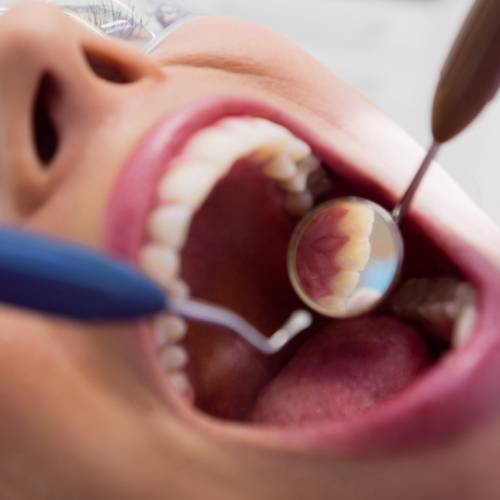
Why Timing Matters for Cavity Fillings: How Decay Progresses
How cavities progress from enamel to pulp, why painless decay still needs treatment, and when timing matters at Dental Specialists of Riverside.
Read More
We all know how frustrating it can be to deal with jaw pain. It can make everyday activities like eating and talking a real struggle. But did you know that your bite, also known as occlusion, could be a major factor contributing to your discomfort? At Dental Specialists of Riverside, we see this connection all the time. Let's dive into how occlusion plays a big role in TMJ (temporomandibular joint) disorders.
Occlusion refers to how your upper and lower teeth fit together when you bite down. Ideally, your teeth should align comfortably, distributing the force evenly across your jaw. However, when your bite is misaligned (a condition called malocclusion), it can strain your temporomandibular joint (TMJ) and the surrounding muscles. This strain can lead to a range of problems, collectively known as temporomandibular joint disorders (TMD or TMJ disorders).
Think of your jaw like a well-oiled machine. When all the parts work in harmony, the machine runs smoothly. But if one component is out of whack, it throws the whole system off balance. That's exactly what happens when your bite is misaligned. The uneven pressure on your TMJ can lead to inflammation, pain, and difficulty moving your jaw.
A misaligned bite can contribute to TMJ disorders in a few ways:
Diagnosing a misaligned bite often involves a comprehensive examination of your teeth, jaw, and facial muscles. Here are some common diagnostic methods:
The good news is that there are effective treatments available to address TMJ disorders caused by a misaligned bite. The specific treatment approach will depend on the severity of your condition and the underlying cause of your misalignment. Here are some common treatment options:
If you're experiencing jaw pain or other symptoms of TMJ disorders, don't hesitate to seek professional help. Early diagnosis and treatment can help prevent further complications and improve your quality of life. At Dental Specialists of Riverside, we're dedicated to providing comprehensive dental care, including the diagnosis and treatment of TMJ disorders. Our experienced dentists will work with you to develop a personalized treatment plan that addresses your specific needs and goals.
Ready to get to the root of your jaw pain? Schedule an appointment with Dental Specialists of Riverside today for a comprehensive exam and cleaning, and let's get you back to smiling comfortably!
Fresh news from the dental world



Mon, Tues, Thur 9AM - 6PM
Weds 10AM - 7PM
Friday 8AM - 5PM
Sat & Sun Closed
Check out what our patients are saying in Riverside...


“What a Difference...”
“My wife and I recently decided to try teeth whitening here. Wow! What a difference. Thank you!”

“So Comfortable...”
"I have been coming here for years and I love this place. I feel so comfortable whenever I go into ortho. Everyone's really friendly! The ladies at the front desk are my favorite, they're always so helpful and always try their best to work around my schedule. Would definitely recommend!"

“Expert Care...”
“I have come a long way with all my dental issues. I’ve been able to take back control of my dental health because of the expert care I’ve received over the years at Dental Specialists of Riverside. I highly recommend this place because they won’t pressure you into stuff that you don’t need or that you are not ready for.”
..png)
“Never Disappointed...”
“I don’t have much time to waste, so I always get my whitening done by the good folks at Dental Specialists of Riverside. Never disappointed.”
“What a Difference...”
“My wife and I recently decided to try teeth whitening here. Wow! What a difference. Thank you!”
“So Comfortable...”
"I have been coming here for years and I love this place. I feel so comfortable whenever I go into ortho. Everyone's really friendly! The ladies at the front desk are my favorite, they're always so helpful and always try their best to work around my schedule. Would definitely recommend!"
Check out our accreditations, sources, and relationships in the wide world of dentistry...
..png)
..png)
..png)
Check us out and follow our Riverside, CA practice on social media...


..png)