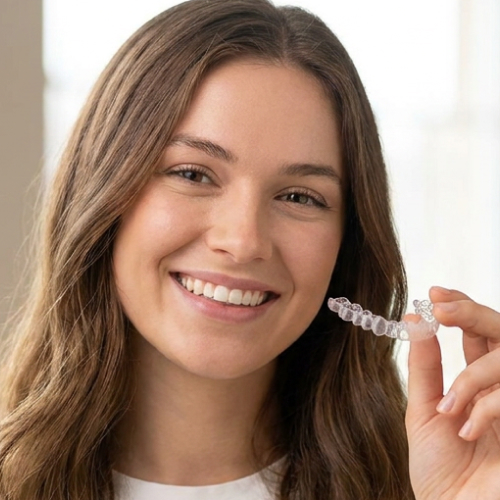
How Many Hours a Day Do You Really Need to Wear Invisalign Trays?
Wondering how long to wear Invisalign each day? Learn the daily wear rules, tray change schedule, and the 30-minute rule. Call our Riverside team today!
Read More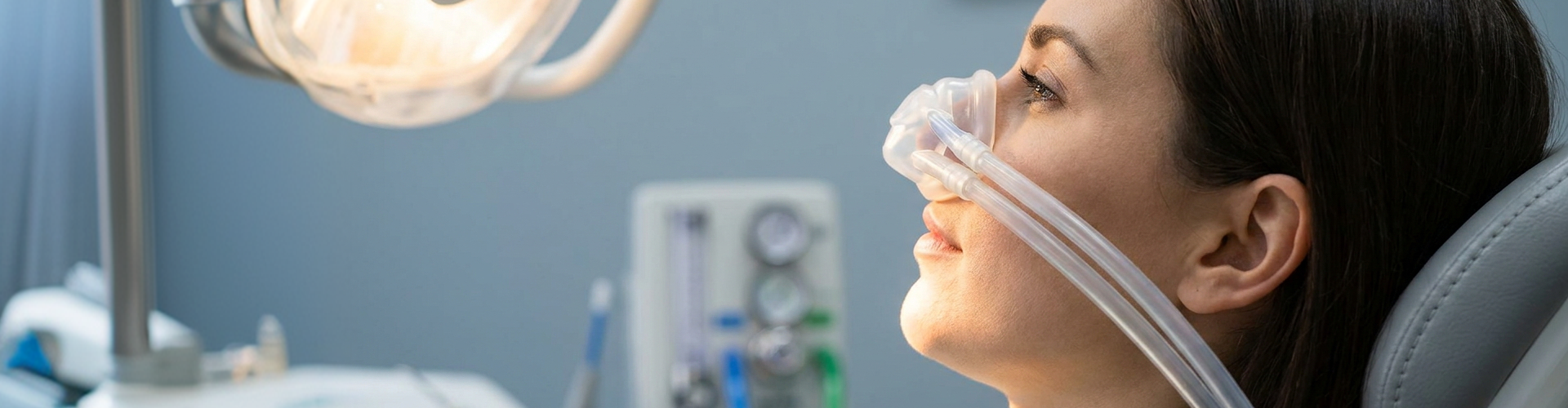
Sedation dentistry is safe when administered by properly credentialed providers — but "safe" depends on your airway anatomy, medical history, and how honestly you communicate with your dentist. Understanding the real risk factors before your appointment can be the difference between a smooth procedure and a serious complication.
For Riverside-area patients, most worry about their heart during sedation. The bigger danger is actually your airway.
According to Cleveland Clinic dental sedation ranges from nitrous oxide (the lightest option) to IV sedation (the deepest form available in a dental office). What changes across that spectrum isn't just how relaxed you feel — it's how much your airway muscles relax along with you.
Patients with obstructive sleep apnea (OSA), a large neck circumference, or crowded throat anatomy carry a significantly elevated risk of airway collapse once sedated. Your dentist should assess your Mallampati score — a clinical measure of throat visibility — before recommending any sedation type. A high Mallampati score signals a narrow airway that can obstruct under sedation.
Here's the counterintuitive part: oral conscious sedation (a pill taken an hour before your appointment) can actually be more dangerous for high-airway-risk patients than IV sedation. Once you swallow that pill, the dosage cannot be adjusted. If you drift deeper than intended, there's no immediate correction. IV sedation, by contrast, allows real-time titration — the provider can reduce or stop the drug flow instantly.
Research published in StatPearls via NCBI confirms that conscious sedation patients must retain the ability to self-ventilate and maintain protective reflexes throughout the procedure. Patients with known sleep apnea should discuss whether nitrous oxide or highly controlled IV sedation — rather than oral sedation — is the safer path.
If you use a CPAP machine at night, tell your dentist before your consultation. That single disclosure changes the entire sedation protocol.
Not all sedation dentistry is created equal — and the gap between providers is wider than most patients realize.
A general dentist can legally administer oral conscious sedation after completing a relatively brief continuing education course in many states. IV sedation, however, requires advanced residency training and separate state permits. A Board-Certified Dental Anesthesiologist represents the highest level of training available. Knowing which type of provider is administering your sedation matters enormously.
Before your appointment, ask these specific questions:
The American Dental Association's guidance through MouthHealthy emphasizes that patients should take an active role in understanding both the risks and benefits of their sedation approach. Asking these questions isn't being difficult — it's being a safe patient.
There's a conversation many patients avoid having with their dentist, and it creates real safety risks.
Daily cannabis users — whether recreational or medical — frequently do not disclose their use before sedation procedures. The concern is usually stigma or a belief that it doesn't matter. It does.
Cannabinoids interact with the same central nervous system pathways targeted by benzodiazepines (like Halcion, the most common oral sedation medication) and IV agents. Regular THC users often develop a cross-tolerance to these drugs. In practice, this means a standard sedation dose may produce little to no effect — leaving the patient under-sedated and potentially agitated mid-procedure. Attempting to compensate by increasing the dose without knowing a patient's baseline tolerance can tip the balance toward respiratory depression or cardiovascular fluctuation.
CBD use affects liver enzymes responsible for metabolizing many sedative medications, potentially altering how quickly or slowly drugs clear your system.
A safety overview from the NIH reinforces that personalized pre-sedation assessments — including a full review of current medications and health conditions — are a foundational safety measure. Cannabis is a medication. Disclose it.
The same principle applies to sleep aids, anxiety medications, opioids, and alcohol use. Your dentist is not there to judge your habits. They are there to keep you safe, and they cannot do that without accurate information.
Once your airway is assessed and your full history is disclosed, the sedation type your dentist recommends should reflect the specific procedure and your individual profile.
StatPearls procedural sedation research notes that appropriate sedation level depends on anticipated pain, anxiety, and the patient's need to remain still. A simple cavity filling rarely warrants IV sedation. A full-arch restoration or periodontal surgery is a different situation entirely.
Nitrous oxide remains the safest option for most patients. It clears your system within minutes, you can drive yourself home, and the dosage is continuously adjustable throughout the procedure.
Oral conscious sedation works well for moderate anxiety and longer procedures — provided your airway anatomy is favorable and your medication history is clean.
IV sedation is reserved for severe anxiety, complex procedures, or patients who did not respond adequately to lighter options. It requires the highest level of provider training and the most robust monitoring setup.
Side effects across all types — drowsiness, nausea, temporary memory gaps — are common and generally resolve within hours. Serious complications are rare when the pre-sedation evaluation is thorough and the provider is properly credentialed. Whether you're coming in for a cleaning and exam or a more involved procedure like a tooth crown or endodontic root canal, discussing sedation options in advance ensures the right level of care is in place before you sit down in the chair.
Dental Specialists of Riverside serves patients throughout Riverside and the greater Inland Empire with a team trained to match the right sedation approach to each patient's unique health profile. If you have questions about airway risk, provider credentials, or which sedation type fits your procedure — whether you're considering dental implants, a tooth extraction, or any other treatment — contact our Riverside office to schedule a consultation.
Medical disclaimer: This article is for informational purposes only and does not constitute medical or dental advice. Always consult a licensed dental professional regarding your specific health needs before undergoing any sedation procedure.
Fresh news from the dental world


Mon, Tues, Thur 9AM - 6PM
Weds 10AM - 7PM
Friday 8AM - 5PM
Sat & Sun Closed
Check out what our patients are saying in Riverside...


“What a Difference...”
“My wife and I recently decided to try teeth whitening here. Wow! What a difference. Thank you!”

“So Comfortable...”
"I have been coming here for years and I love this place. I feel so comfortable whenever I go into ortho. Everyone's really friendly! The ladies at the front desk are my favorite, they're always so helpful and always try their best to work around my schedule. Would definitely recommend!"

“Expert Care...”
“I have come a long way with all my dental issues. I’ve been able to take back control of my dental health because of the expert care I’ve received over the years at Dental Specialists of Riverside. I highly recommend this place because they won’t pressure you into stuff that you don’t need or that you are not ready for.”
..png)
“Never Disappointed...”
“I don’t have much time to waste, so I always get my whitening done by the good folks at Dental Specialists of Riverside. Never disappointed.”
“What a Difference...”
“My wife and I recently decided to try teeth whitening here. Wow! What a difference. Thank you!”
“So Comfortable...”
"I have been coming here for years and I love this place. I feel so comfortable whenever I go into ortho. Everyone's really friendly! The ladies at the front desk are my favorite, they're always so helpful and always try their best to work around my schedule. Would definitely recommend!"
Check out our accreditations, sources, and relationships in the wide world of dentistry...
..png)
..png)
..png)
Check us out and follow our Riverside, CA practice on social media...

..png)


