
Why Your Invisalign Trays Aren't Fitting—And What It Means for Your Treatment
Invisalign tray not fitting right in Riverside? Learn about tracking, gaps, and refinements—and what to do next. Call Dental Specialists of Riverside today.
Read More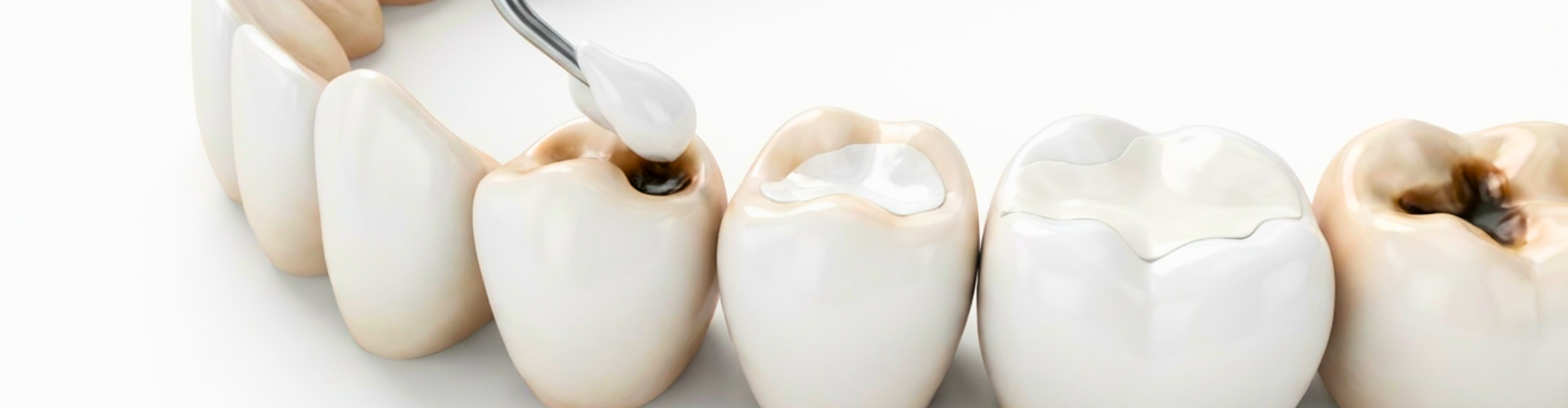
Most people don’t wake up thinking, “Today feels like a cavity day.” Cavities usually start quietly. A little sensitivity to cold. A spot that catches floss. A weird twinge when you chew something crunchy. Easy to ignore, until it isn’t.
At Dental Specialists of Riverside, we see the whole spectrum, from early tooth decay that can be stopped in its tracks to deep cavities that need careful repair. The good news is that modern dentistry gives us plenty of ways to treat cavities and restore teeth with fillings that look natural and feel comfortable.
This article breaks down what patients actually want to know about cavities and fillings, including the questions people ask most often when they’re deciding whether to treat a cavity now or “wait and see.”
A cavity is tooth decay. It happens when bacteria in your mouth feed on sugars and starches and produce acids. Those acids soften and break down enamel over time.
If you picture your tooth as a house, enamel is the roof. Once the roof is damaged, the inside of the house is exposed. And tooth decay does not “pause” because we’re busy. It keeps moving, especially if the area is hard to clean.
Here’s the typical progression of a cavity:
That is why an early filling often feels like a simple fix, while a delayed cavity can turn into a root canal and crown conversation.
A filling is simply a way to restore the tooth after decay is removed. It seals the tooth, protects the remaining structure, and helps you chew normally again.
A well done filling should:
At Dental Specialists of Riverside, we focus on conservative care. That means we remove what needs to be removed and preserve what can be preserved, because keeping your natural tooth structure matters.
Pain is not required for a cavity to exist. In fact, many cavities cause no symptoms until they get bigger.
Pay attention if you notice:
If any of these sound familiar, it’s worth getting checked. A small cavity treated with a filling is usually straightforward. The longer it waits, the more complicated the repair can become.
Patients often expect fillings to feel dramatic. In reality, most are pretty routine.
A typical filling visit looks like this:
Afterward, mild sensitivity can happen for a short time, especially to cold. If your bite feels “high,” that is fixable with a quick adjustment.
There is no single “best filling” for everyone. The best choice depends on where the cavity is, how big it is, your bite, and your long term goals.
Common filling materials include:
If you need help choosing, your dentist can walk you through the pros and cons for your specific tooth. The “right” filling is the one that fits your tooth and your lifestyle.
This is a fair question, and honestly, it comes up more than you might think. Dental care should never feel like pressure. A dentist’s job is to diagnose what is present and explain your options clearly.
Here’s what is true: not every suspicious spot is a cavity that needs a filling today. Early enamel changes can sometimes be managed with remineralization strategies, fluoride, and improved home care.
So how do you know when a filling is truly necessary?
A filling is usually recommended when:
What you should expect from an ethical recommendation:
If you ever feel unsure, it is okay to ask: “Can you show me where the cavity is?” A good dentist will not be offended. They will explain it.
At Dental Specialists of Riverside, we believe trust is part of the treatment. We would rather you understand the why than leave feeling rushed.
If you’ve had a few cavities, you’re not alone. Cavities are incredibly common. But “normal” depends on your risk factors, habits, and biology.
Some people go decades without a cavity. Others get cavities even with decent brushing. That doesn’t mean you’re doing everything wrong. It means your mouth may need a different strategy.
What matters more than “normal” is your trend.
A practical way to think about it:
If you feel like you “keep getting cavities no matter what,” that is a sign you should ask for a prevention plan, not just another filling.
This question is where the real work happens. When cavities come easily, it usually isn’t one single cause. It’s a combination, and the solution is often a few small changes done consistently.
Common reasons people get cavities easily:
1. Dry mouth: Saliva protects teeth. It neutralizes acid and helps wash away bacteria. Dry mouth can be caused by medications, mouth breathing, dehydration, pregnancy, stress, or certain health conditions.
2. Frequent snacking or sipping: It’s not only what you eat. It’s how often. Constant grazing gives bacteria a steady food supply, so your teeth stay in an acidic state longer.
3. Sugary drinks and hidden sugars: Juices, flavored coffee drinks, sports drinks, and even “healthy” snacks can be surprisingly cavity friendly.
4. Brushing habits that miss key areas: Most cavities form where plaque likes to hide:
5. Inconsistent flossing: Brushing does not clean between teeth well enough. Many cavities start there, and you cannot see them without X rays.
6. Tooth anatomy: Some people have deep grooves that naturally trap plaque. Sealants or targeted cleaning can help.
7. Old fillings that are leaking: Fillings are not forever. Over time, margins can wear down, allowing bacteria to sneak in.
8. Acid reflux: Stomach acid can weaken enamel, making it easier for cavities to form.
If cavities come easily for you, try this prevention plan:
You do not need perfection. You need consistency and a plan tailored to your risk level.
Patients often ask if they can wait. Sometimes you can, and sometimes waiting is what turns a small issue into a big repair.
Watching a tooth makes sense when:
Waiting becomes risky when:
If you’re unsure where you fall, ask your dentist to explain the “why now” and what could happen if you wait. You should never feel like you’re guessing.
Most people go back to normal the same day.
It’s common to notice:
Call the office if:
These issues are usually fixable, and quick adjustments can make a big difference.
A filling repairs a cavity, but it does not make the tooth immune to future decay. The edges of fillings can collect plaque if home care is inconsistent.
To protect your fillings and reduce new cavities:
If you want your fillings to last, think of them as part of a bigger routine, not a one time event.
If you’ve been dealing with repeated cavities, old fillings that need attention, or tooth sensitivity you can’t explain, it’s time for a thorough look and a clear plan.
At Dental Specialists of Riverside, we focus on careful diagnosis, conservative treatment, and prevention strategies that actually fit your life.
Schedule an appointment today so we can check for cavities, review any existing fillings, and help you protect your teeth for the long run.
Fresh news from the dental world






Mon, Tues, Thur 9AM - 6PM
Weds 10AM - 7PM
Friday 8AM - 5PM
Sat & Sun Closed
Check out what our patients are saying in Riverside...


“What a Difference...”
“My wife and I recently decided to try teeth whitening here. Wow! What a difference. Thank you!”

“So Comfortable...”
"I have been coming here for years and I love this place. I feel so comfortable whenever I go into ortho. Everyone's really friendly! The ladies at the front desk are my favorite, they're always so helpful and always try their best to work around my schedule. Would definitely recommend!"

“Expert Care...”
“I have come a long way with all my dental issues. I’ve been able to take back control of my dental health because of the expert care I’ve received over the years at Dental Specialists of Riverside. I highly recommend this place because they won’t pressure you into stuff that you don’t need or that you are not ready for.”
..png)
“Never Disappointed...”
“I don’t have much time to waste, so I always get my whitening done by the good folks at Dental Specialists of Riverside. Never disappointed.”
“What a Difference...”
“My wife and I recently decided to try teeth whitening here. Wow! What a difference. Thank you!”
“So Comfortable...”
"I have been coming here for years and I love this place. I feel so comfortable whenever I go into ortho. Everyone's really friendly! The ladies at the front desk are my favorite, they're always so helpful and always try their best to work around my schedule. Would definitely recommend!"
Check out our accreditations, sources, and relationships in the wide world of dentistry...
..png)
..png)
..png)
Check us out and follow our Riverside, CA practice on social media...


..png)