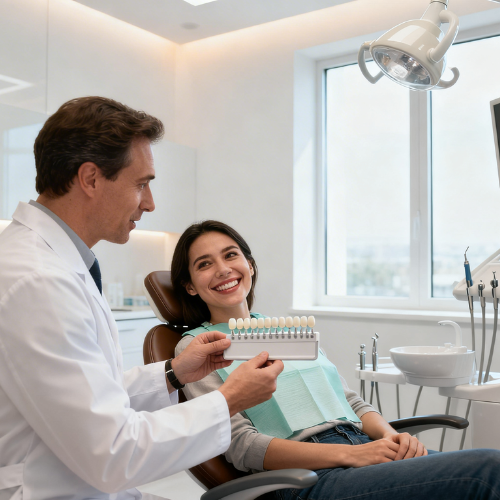
Do Veneers Stain Over Time? What You Should Know Before Getting One
Wondering if veneers stain over time? Dental Specialists of Riverside explains what causes discoloration and how to protect your smile in Riverside, CA.
Read More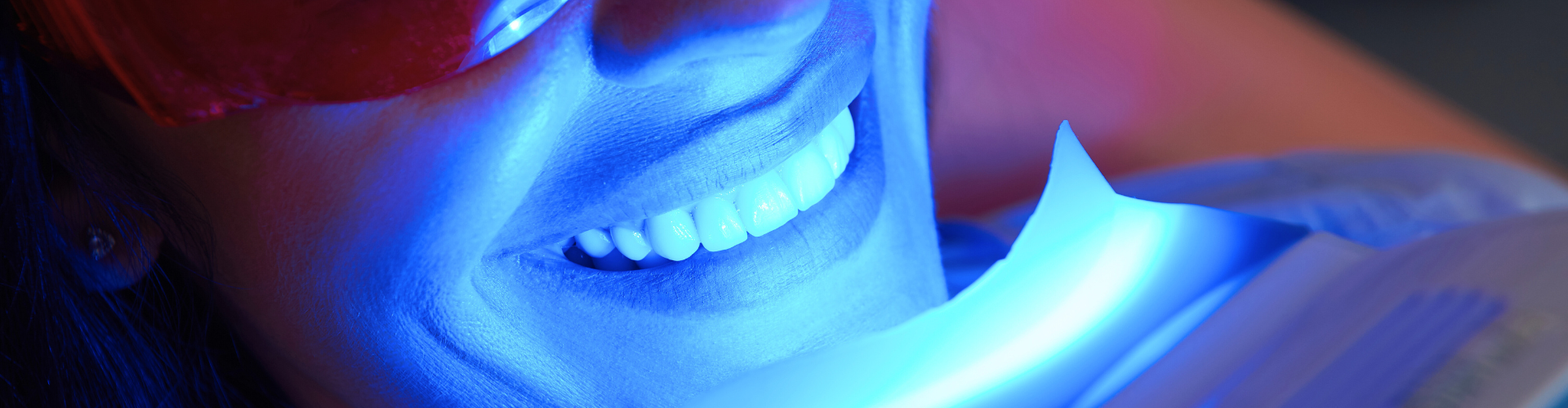
Written by Dr. David Won, DDS
Medically Reviewed by Chad Hawkins, DDS | Orthodontist
I get asked about whitening options almost every day at our Riverside practice. The confusion is understandable—so many products and methods exist that it's hard to know what works. Some patients use drugstore strips and trays with no results, while others want the fastest solution regardless of cost.
Both in-office whitening and at-home kits can be effective, but they offer vastly different experiences. Professional treatments use 35-43% hydrogen peroxide, while at-home options typically use 6-16% carbamide peroxide. This concentration gap is crucial.
As a dentist in the Inland Empire for years, I've seen nearly 90% of my patients—especially after orthodontics—ask about whitening. A brighter smile feels good. But choosing isn't just about results; it's about speed, sensitivity, cost, and lifestyle. Let me explain the real differences, as marketing doesn't always tell the whole story.
The main difference is concentration and control. In-office whitening uses high-strength peroxide gels (15-43% hydrogen peroxide) that I apply directly after protecting your gums. At-home kits—custom trays from our office or over-the-counter strips—use much lower concentrations, usually 6-10% hydrogen peroxide or up to 16% carbamide peroxide, according to the American Dental Association.
This concentration gap means in-office treatments work much faster. You can leave 3-8 shades lighter after about an hour. At-home kits take days or weeks of daily use for similar results, which suits some schedules better.
Interestingly, long-term effectiveness is similar. Systematic reviews show no significant difference in whitening results at the six-month mark between professional in-office treatments and dentist-supervised at-home kits. The ADA supports both methods when done correctly.
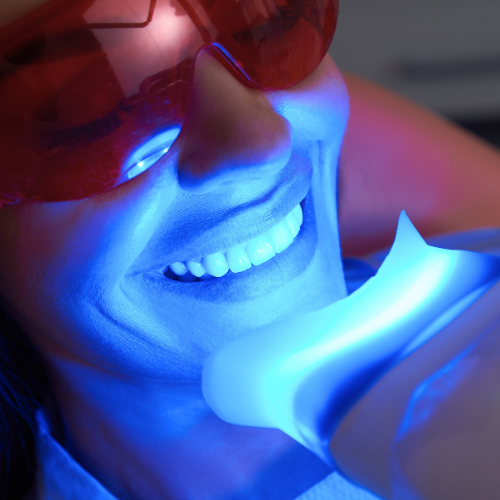
The processes differ. In-office, we isolate your gums, apply the gel, and sometimes use a light (though light activation evidence is weak—it might just look impressive).
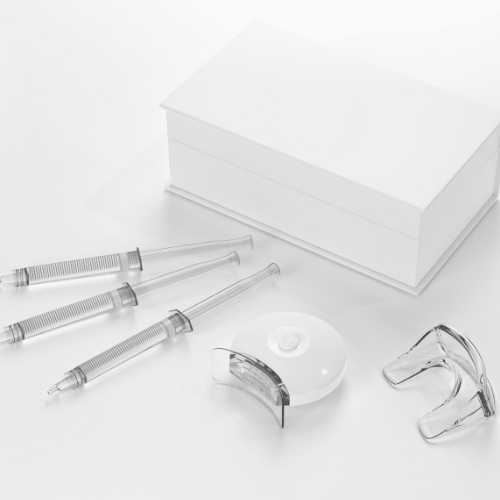
At-home kits involve custom trays filled with gel worn 30-60 minutes daily for one to two weeks. This offers convenience and lower cost—sometimes half of in-office.
Risks exist with both. Temporary tooth sensitivity affects most people, and gum irritation can occur if gel leaks from poorly fitting trays. In-office treatments can cause more intense initial sensitivity, but it fades faster. At-home kits tend to cause milder sensitivity that lasts longer due to repeated application.
Sensitivity is unpredictable. Last month, one patient had no discomfort with in-office whitening, while her sister couldn't tolerate even the gentlest at-home kit.
Professional in-office whitening is significantly faster, every single time.
We're comparing a one-hour appointment to two to four weeks of daily tray use. Studies show at-home whitening requires 14 to 280 times longer treatment duration than in-office procedures, as research published in PMC found. One paper found over-the-counter bleaching took 16 days to match what a single in-office session achieved in one day.
The immense difference is due to concentration. When I apply 35-38% hydrogen peroxide gel in the office with proper tissue protection, it quickly penetrates enamel and breaks down stains. Your at-home tray gel, at maybe 10% carbamide peroxide, works slowly.
Not everyone needs instant results. Some patients prefer gradual whitening for a more natural look, especially if they aren't preparing for an event. At-home trays also tend to produce longer-lasting results. Combined protocols—in-office followed by at-home maintenance—offer the best of both worlds and longest brightness.
If speed is your priority, in-office is the answer. You get immediate results in 60-90 minutes. Some patients see dramatic changes right away, particularly if staining comes from coffee, tea, or red wine.
However, faster doesn't always mean better. At-home trays cause fewer side effects, cost less, and give you control. You can pause for sensitivity or extend treatment for more whitening. Professional in-office treatments don't offer that flexibility.
For example, a patient needing dramatic whitening before her daughter's wedding in two weeks chose in-office. Another patient, managing sensitivity, whitened gradually over a month with custom at-home trays.
In-office whitening is dramatically, undeniably faster. At-home trays offer gradual, controlled, often longer-lasting results at a lower cost. The right choice depends on your timeline, budget, and how your teeth respond to bleaching agents.
This is where I see the most confusion in my Riverside practice, and I need to be direct: neither option is clearly safer for sensitive teeth. The research doesn't support that idea.
Tooth sensitivity affects 43-80% of people using peroxide-based whitening, regardless of method. Meta-analyses found no significant difference in sensitivity risk or intensity between in-office and at-home bleaching, according to a systematic review. Both cause temporary sensitivity in most patients—it's inherent to peroxide penetrating enamel.
What happens is peroxide breaks down and seeps into enamel channels, irritating the tooth nerve. Concentration matters less than you'd think for sensitivity—one randomized trial using 35% hydrogen peroxide in-office caused sensitivity in every participant.
At-home kits aren't gentler simply because the concentration is lower. Daily application for weeks provides repeated exposure. Some patients find this worse than one intense in-office session. Others prefer spreading out the discomfort.
Actually, over-the-counter products might be "safer" for truly sensitive teeth, but only because EU regulations cap them at 0.1% peroxide—so low they barely work. They're safer due to weakness, which defeats the purpose.
What helps? Desensitizing agents like potassium nitrate, fluoride, or hydroxyapatite in your gel or toothpaste. We often recommend desensitizing toothpaste for two weeks before and during treatment. This does make a difference in my experience.
I had a patient with notorious tooth sensitivity who feared whitening. We started her on desensitizing toothpaste, then used custom at-home trays with a gentler gel for shorter sessions (15 minutes instead of 60). She tolerated it well and got great results over a month. But other sensitive patients do fine with in-office whitening because the intense sensitivity only lasts a day or two.
If you have sensitive teeth, professional supervision is more important than the method. Custom trays fit better, reducing gel leakage and irritation. In-office treatments include gum protection and professional monitoring. DIY strips and drugstore trays carry higher risk of misuse, gum burns, and uneven whitening—especially for sensitive teeth.
Here's what I want you to know: there's no single solution to whitening. I've seen patients succeed with at-home kits, and others who needed the speed and control of in-office treatment. At Dental Specialists of Riverside, we take time to understand your goals, sensitivity history, and timeline before recommending anything.
Whether you're preparing for a big event or just want to feel more confident, we have effective options. Custom at-home trays, professional in-office whitening, or a combination approach—we'll determine what suits your teeth and life here in the Inland Empire.
Don't waste money on ineffective products that could irritate your gums. Schedule a consultation with us, and we'll create a tailored whitening plan. Your smile deserves professional care, and we're here to make it happen safely and effectively.
Fresh news from the dental world



Mon, Tues, Thur 9AM - 6PM
Weds 10AM - 7PM
Friday 8AM - 5PM
Sat & Sun Closed
Check out what our patients are saying in Riverside...


“What a Difference...”
“My wife and I recently decided to try teeth whitening here. Wow! What a difference. Thank you!”

“So Comfortable...”
"I have been coming here for years and I love this place. I feel so comfortable whenever I go into ortho. Everyone's really friendly! The ladies at the front desk are my favorite, they're always so helpful and always try their best to work around my schedule. Would definitely recommend!"

“Expert Care...”
“I have come a long way with all my dental issues. I’ve been able to take back control of my dental health because of the expert care I’ve received over the years at Dental Specialists of Riverside. I highly recommend this place because they won’t pressure you into stuff that you don’t need or that you are not ready for.”
..png)
“Never Disappointed...”
“I don’t have much time to waste, so I always get my whitening done by the good folks at Dental Specialists of Riverside. Never disappointed.”
“What a Difference...”
“My wife and I recently decided to try teeth whitening here. Wow! What a difference. Thank you!”
“So Comfortable...”
"I have been coming here for years and I love this place. I feel so comfortable whenever I go into ortho. Everyone's really friendly! The ladies at the front desk are my favorite, they're always so helpful and always try their best to work around my schedule. Would definitely recommend!"
Check out our accreditations, sources, and relationships in the wide world of dentistry...
..png)
..png)
..png)
Check us out and follow our Riverside, CA practice on social media...


..png)