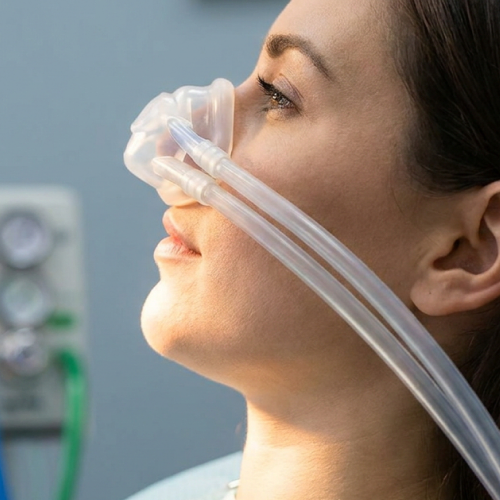
Is Sedation Dentistry Safe and What Are the Risks You Need to Know?
Curious about sedation dentistry safety and risks? Learn about the safest options for your next dental procedure. Schedule your stress-free visit today!
Read More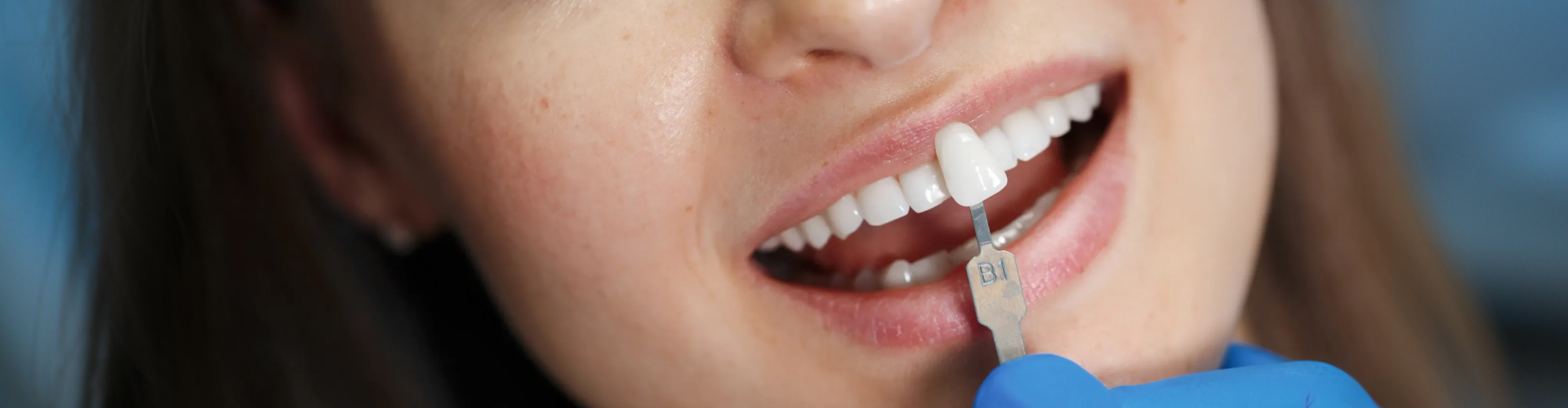
Most practices quote two or three visits for veneers, but the full process often involves four appointments when you count the temporary phase and post-placement fine-tuning. Understanding what happens at each step — including the sensations you'll experience — helps you arrive prepared rather than anxious.
Most veneer guides skip straight from "prep day" to "delivery day." That skips something critical: the time you spend in temporary veneers is a diagnostic window, not just a waiting period. For Riverside-area patients, this phase ensures the final restoration fits their lifestyle perfectly.
After your dentist removes a thin layer of enamel and takes impressions, you'll wear temporaries for one to three weeks while the lab fabricates your final porcelain veneers. According to WebMD, this multi-visit process is standard for traditional porcelain veneers specifically because custom fabrication takes time.
Use that time deliberately. Speak aloud. Read a paragraph out loud and listen for any distortion on "S" and "F" sounds — these consonants require your tongue and lips to interact with your front teeth in very specific ways. If the temporaries feel too thick or too long, the final veneers will have the same problem unless you flag it. Test how your upper and lower front teeth meet when you slide your jaw forward. That contact pattern — called incisal guidance — affects both comfort and how stress is distributed across the porcelain long-term.
Write down what feels off. That feedback goes directly to your dentist and the ceramist. This is how the temporary phase functions as a "safety check" rather than an inconvenience. The biggest fear most patients have isn't the drill — it's looking or sounding different. The temporary phase is where you catch that before anything is permanent.
Most pain-focused content warns you about the numbing injection. What it rarely covers is the bonding appointment itself, which involves a specific sequence of sensations that aren't painful but can feel alarming if you don't expect them.
Here's what typically happens during cementation:
The acid etch: Your dentist applies phosphoric acid gel to the prepared tooth surface to create microscopic roughness for bonding. Expect a distinctly sour or tart taste if any reaches your tongue. It rinses off quickly.
The air-dry: After rinsing the etch, the tooth surface is dried with an air syringe. If your dentin is exposed from enamel removal, you may feel a brief cold zing — sharp but fleeting. This is normal sensitivity, not damage.
Seating and pressing: Each veneer is seated with resin cement and held under firm pressure. You'll feel the dentist pressing and hear clicking sounds as they work the cement into proper position and check margins.
Flossing through cement: Once each veneer is light-cured and hardened, excess cement must be removed from between teeth. This involves pressure and a dragging sensation as floss works through tight contacts. It can feel forceful. It's not.
The polishing burr: A high-speed rotary instrument cleans residual cement from margins. The pitch is noticeably high. Combined with vibration against the tooth, some patients find this the most startling part of the visit — even though it's the least invasive.
Healthline's overview of dental veneers notes that traditional veneer placement typically uses local anesthetic during the prep appointment, so bonding day is usually more comfortable than the first procedure. Knowing that these sensations are normal makes them far easier to tolerate.
Here's where the "two to three visit" claim quietly falls apart. Most patients need a follow-up adjustment appointment — typically 48 to 72 hours after delivery.
Why? Because the local anesthetic used during the bonding appointment alters proprioception, which is your sense of how your teeth come together. You literally cannot feel your bite accurately while numb. Even the most experienced clinician cannot verify perfect occlusal balance in that state.
Once the anesthesia clears and any minor gum inflammation settles, patients sometimes notice that specific teeth feel "heavy" or that the bite feels slightly off in certain jaw positions. This is not a complication. It's expected.
At the fine-tuning visit, your dentist uses articulating paper — thin paper that marks contact points in color — to identify where pressure is concentrated. They then remove microns of porcelain from those spots using a polishing instrument. Research published on PMC on veneer survival rates underscores that occlusal balance is directly tied to long-term restoration success, since uneven bite pressure is a primary driver of porcelain fracture and TMJ strain over time.
Think of this visit as the hallmark of a high-quality result. A practice that schedules it is one that prioritizes the longevity of your investment, not just the aesthetics of delivery day.
Not every veneer patient follows the same timeline. The number of appointments and the nature of each one depends significantly on which type of veneer is right for your situation.
Porcelain veneers require the most preparation — enamel removal, impressions, a temporary phase, delivery, and a fine-tuning visit. They offer the best stain resistance and longevity, often lasting 10 to 15 years. Mouthhealthy.org from the ADA emphasizes that only licensed dentists should place veneers, particularly because enamel removal is irreversible.
Composite veneers can often be completed in a single visit. Your dentist sculpts composite resin directly onto the tooth and cures it with a light. There's no lab phase and no temporaries. The tradeoff is that composite is more susceptible to staining and wear over time compared to porcelain. Patients who want to explore broader aesthetic dentistry options can discuss which approach best suits their goals during a consultation.
No-prep veneers (such as Lumineers) require minimal to no enamel removal. They're thinner — typically 0.2 to 0.5 mm — and the process is less invasive. A Healthline guide on no-prep veneers notes these can sometimes be placed in a single appointment when digital impressions are used, though they're not ideal for masking severe discoloration.
The right choice depends on your specific dental anatomy, the issues you want to correct, and how much natural tooth structure you have available. A thorough consultation — before any enamel is touched — is where that decision gets made properly. Some patients also find that combining veneers with pro teeth whitening on surrounding teeth helps achieve a more uniform final result.
If you're weighing veneers and want a clear picture of what your specific process would look like, Dental Specialists of Riverside offers consultations for patients throughout Riverside and the broader Inland Empire. We walk through your options, the visit timeline, and what to realistically expect — before any decisions are made. Whether your goals are cosmetic or restorative, our team can also address related concerns such as cavity fillings or gum disease that may need to be resolved before veneer placement begins.
Medical disclaimer: This article is intended for general informational purposes only and does not constitute dental or medical advice. Individual treatment needs vary. Please consult a licensed dental professional for diagnosis and personalized care.
Fresh news from the dental world


Mon, Tues, Thur 9AM - 6PM
Weds 10AM - 7PM
Friday 8AM - 5PM
Sat & Sun Closed
Check out what our patients are saying in Riverside...


“What a Difference...”
“My wife and I recently decided to try teeth whitening here. Wow! What a difference. Thank you!”

“So Comfortable...”
"I have been coming here for years and I love this place. I feel so comfortable whenever I go into ortho. Everyone's really friendly! The ladies at the front desk are my favorite, they're always so helpful and always try their best to work around my schedule. Would definitely recommend!"

“Expert Care...”
“I have come a long way with all my dental issues. I’ve been able to take back control of my dental health because of the expert care I’ve received over the years at Dental Specialists of Riverside. I highly recommend this place because they won’t pressure you into stuff that you don’t need or that you are not ready for.”
..png)
“Never Disappointed...”
“I don’t have much time to waste, so I always get my whitening done by the good folks at Dental Specialists of Riverside. Never disappointed.”
“What a Difference...”
“My wife and I recently decided to try teeth whitening here. Wow! What a difference. Thank you!”
“So Comfortable...”
"I have been coming here for years and I love this place. I feel so comfortable whenever I go into ortho. Everyone's really friendly! The ladies at the front desk are my favorite, they're always so helpful and always try their best to work around my schedule. Would definitely recommend!"
Check out our accreditations, sources, and relationships in the wide world of dentistry...
..png)
..png)
..png)
Check us out and follow our Riverside, CA practice on social media...


..png)