
Why Your Invisalign Trays Aren't Fitting—And What It Means for Your Treatment
Invisalign tray not fitting right in Riverside? Learn about tracking, gaps, and refinements—and what to do next. Call Dental Specialists of Riverside today.
Read More
Most people think tooth loss starts with a cavity or an accident. In reality, gum disease is one of the leading reasons adults lose teeth, and it often works quietly in the background. You might still be brushing, flossing occasionally, and chewing without pain, all while damage is happening beneath the surface.
At Dental Specialists of Riverside, we see this pattern often. Teeth that look fine on the outside begin to loosen because the support system underneath has been compromised. Understanding how gum disease progresses, what warning signs to watch for, and when to act can make the difference between keeping your natural teeth and facing tooth loss later.
This is not about fear. It is about clarity, awareness, and knowing that early care can change the outcome.
Teeth are not simply embedded in bone like pegs in wood. They rely on a complex support system that includes:
When all of these parts are healthy, your teeth remain stable and functional. Gum disease disrupts this balance gradually, often without noticeable pain at first.
Gum disease begins with inflammation. Over time, inflammation becomes infection. Once infection sets in, the structures that hold teeth in place start to break down.
Gum disease usually starts as gingivitis, which is inflammation of the gums caused by plaque buildup. Plaque is a sticky film of bacteria that forms on teeth daily. If it is not removed thoroughly and consistently, it hardens into tartar and creeps below the gumline.
Here is how the damage unfolds step by step:
1. Gums pull away from the teeth: As bacteria accumulate beneath the gumline, the gums become irritated and swollen. Over time, they begin to separate from the teeth, forming pockets. These pockets trap even more bacteria and debris, making them difficult to clean at home.
2. Infection spreads below the surface: Once bacteria settle into these pockets, the body responds with inflammation. This response is meant to protect you, but prolonged inflammation causes harm. The periodontal ligament and surrounding bone begin to deteriorate.
3. Bone loss begins: The jawbone is living tissue. When it is exposed to chronic infection, it starts to resorb. Bone loss does not happen overnight, but it is progressive. As bone density decreases, teeth lose the firm foundation they need to stay in place.
4. Teeth become loose and unstable: Without enough bone and ligament support, teeth may start to shift or feel loose. Chewing can become uncomfortable, and spacing between teeth may change. At this stage, damage is often advanced but still manageable with the right care.
This process is usually painless in the early stages, which is why gum disease is so often overlooked.
Unlike cavities, gum disease does not affect just one spot. It impacts the entire mouth and tends to worsen with time if left untreated. It is also closely linked to overall health, with research connecting advanced gum disease to conditions like heart disease and diabetes.
What makes gum disease particularly risky is that it attacks the foundation of your teeth. Even a tooth with no decay can be lost if the surrounding support fails.
Yes, and it happens more often than people realize.
Tooth loss from gum disease usually occurs gradually, not suddenly. Many patients assume loose teeth are a normal part of aging, but that is not true. Healthy gums and bone can support teeth for a lifetime.
Here is what typically happens when gum disease is ignored:
At advanced stages, known as periodontitis, the damage is often extensive. While treatments can slow or stop progression, rebuilding lost bone becomes more challenging. This is why early intervention matters so much.
It is also important to understand that tooth loss from gum disease is preventable in most cases. Regular dental visits and proper treatment can halt the disease before it reaches this point.
Losing teeth is not just a physical issue. It affects confidence, speech, eating habits, and overall quality of life. Many patients tell us they wish they had known earlier how serious gum disease could become.
Common concerns after tooth loss include:
Protecting your gums is one of the most effective ways to protect your smile as a whole.
Gum disease does not always cause pain, but it does leave clues. Paying attention to these signs can help you act before lasting damage occurs.
Early warning signs may include:
More advanced warning signs include:
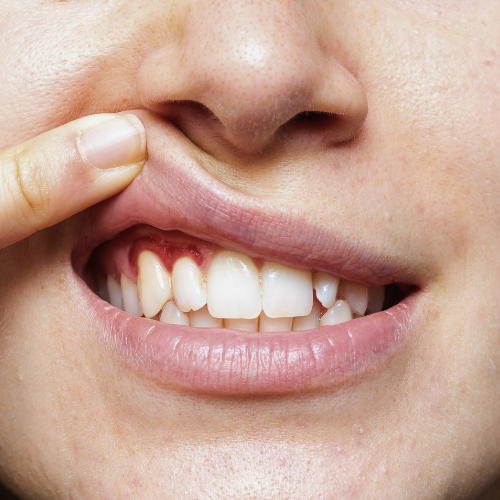
Bleeding gums are often dismissed as normal, but healthy gums do not bleed regularly. This is usually one of the first signs that gum disease is developing.
Many people assume they would feel pain if something were seriously wrong. Gum disease challenges that assumption. In its early and even moderate stages, discomfort may be minimal or nonexistent.
Other reasons it is missed include:
By the time symptoms become obvious, significant damage may already have occurred.
At Dental Specialists of Riverside, the focus is on catching gum disease early and tailoring treatment to each patient. Treatment depends on how far the disease has progressed.
Common approaches include:
In more advanced cases, specialized periodontal treatments may be recommended to stabilize the gums and preserve remaining bone.
The earlier treatment begins, the more conservative it can be.
Professional care is essential, but daily habits matter just as much. Key steps include:
Consistency is more important than perfection. Small daily habits add up to long term protection.
Gum disease does not automatically mean tooth loss. When identified early, it can be treated and managed successfully. Even in more advanced stages, treatment can slow progression and help preserve your natural teeth.
The most important step is awareness. Knowing that gum health is directly tied to tooth stability allows you to take action before problems escalate.
If you have noticed bleeding gums, gum recession, or changes in how your teeth feel, it is worth having them evaluated. Waiting rarely improves the situation, but timely care often does.
At Dental Specialists of Riverside, we are here to help you protect your teeth and your long term oral health.
If you have concerns about your gums or want to stay ahead of potential issues, we encourage you to schedule an appointment. A proactive visit today can help you avoid tooth loss tomorrow and keep your smile strong for years to come.
Fresh news from the dental world






Mon, Tues, Thur 9AM - 6PM
Weds 10AM - 7PM
Friday 8AM - 5PM
Sat & Sun Closed
Check out what our patients are saying in Riverside...


“What a Difference...”
“My wife and I recently decided to try teeth whitening here. Wow! What a difference. Thank you!”

“So Comfortable...”
"I have been coming here for years and I love this place. I feel so comfortable whenever I go into ortho. Everyone's really friendly! The ladies at the front desk are my favorite, they're always so helpful and always try their best to work around my schedule. Would definitely recommend!"

“Expert Care...”
“I have come a long way with all my dental issues. I’ve been able to take back control of my dental health because of the expert care I’ve received over the years at Dental Specialists of Riverside. I highly recommend this place because they won’t pressure you into stuff that you don’t need or that you are not ready for.”
..png)
“Never Disappointed...”
“I don’t have much time to waste, so I always get my whitening done by the good folks at Dental Specialists of Riverside. Never disappointed.”
“What a Difference...”
“My wife and I recently decided to try teeth whitening here. Wow! What a difference. Thank you!”
“So Comfortable...”
"I have been coming here for years and I love this place. I feel so comfortable whenever I go into ortho. Everyone's really friendly! The ladies at the front desk are my favorite, they're always so helpful and always try their best to work around my schedule. Would definitely recommend!"
Check out our accreditations, sources, and relationships in the wide world of dentistry...
..png)
..png)
..png)
Check us out and follow our Riverside, CA practice on social media...


..png)