Have you ever stopped to think about just how amazing your teeth are? We use them every single day, but most of us probably don't know a whole lot about what's going on beneath that shiny, white exterior. At Dental Specialists of Riverside, we believe that understanding your teeth is a crucial part of keeping them healthy. So, let's take a look inside your tooth, specifically exploring the parts that come into play when we talk about root canals.
Trust us, it's way more interesting than you might think!
What Are the Main Parts of a Tooth?
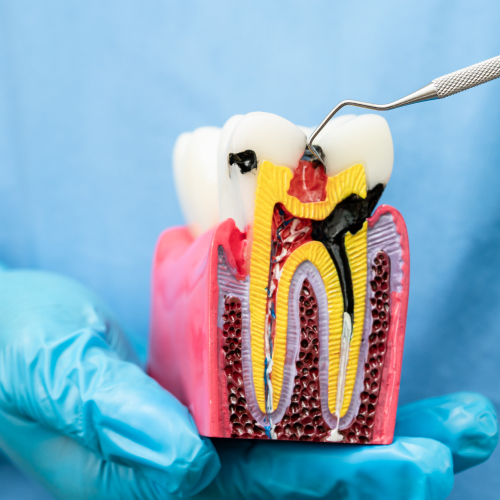
Think of your tooth like a layered cake – except, you know, way more durable and less delicious. Each layer has a specific job and works together to make your tooth strong and functional. Let's break it down, starting from the outside:
- Enamel: This is the tough outer shell of your tooth, the hardest substance in the human body. It's your tooth's first line of defense against all the wear and tear of chewing, grinding, and those occasional sticky candies (we all have our weaknesses!). Enamel is made up mostly of minerals, primarily hydroxyapatite, which is what gives it its incredible strength.
- Dentin: Just below the enamel, you'll find dentin. It's a bit softer than enamel and makes up the bulk of the tooth. Dentin is yellowish in color and contains microscopic tubules, or tiny channels, that lead to the next layer, the pulp. These tubules can transmit sensations like hot, cold, or pressure to the nerves within the pulp, which is why you might feel sensitivity if your enamel is worn down, exposing the dentin.
- Pulp: Now we're getting to the heart of the matter – the pulp chamber. This is the innermost part of your tooth and is often referred to as the "nerve" of the tooth, though it's a bit more complex than that. The pulp is a soft tissue containing nerves, blood vessels, and connective tissue. It's what keeps your tooth alive and nourished. The blood vessels bring nutrients to the tooth and remove waste products, while the nerves provide sensation. This is also where root canal problems start!5What Is a Root Canal?
We've mentioned "root canal" a few times now, so let's clarify what that actually means. The term "root canal" can refer to two things:
- The Root Canal System: This refers to the part of the pulp chamber that extends down into the roots of your tooth. Just like a tree has roots that anchor it into the ground, your teeth have roots that anchor them into your jawbone. Inside these roots are narrow canals that contain the pulp tissue. The number of root canals varies depending on the type of tooth. For example, your front teeth usually have one or two canals, while molars can have three or even four.
- The Root Canal Procedure: This is a dental procedure performed to treat an infected or inflamed pulp. When the pulp becomes damaged, either due to deep decay, a crack, or trauma, bacteria can enter the pulp chamber and cause an infection. This can lead to severe pain, swelling, and even tooth loss if left untreated. During a root canal procedure, a dentist or endodontist (a specialist in root canal treatment) will carefully remove the infected pulp, clean and disinfect the root canal system, and then fill the canals with a biocompatible material to prevent further infection. Finally, the tooth is usually restored with a crown to protect it and restore its function.
Why is the Pulp So Important?
You might be wondering, "If the pulp can get infected, why do we even need it?" Well, the pulp plays a vital role in the development and health of your teeth, especially during childhood and adolescence. It's responsible for forming the dentin and enamel during tooth development. Once the tooth is fully formed, the pulp's primary function is to provide nourishment and sensation. While a mature tooth can survive without the pulp (as is the case after a root canal), it's always best to preserve the natural tooth structure whenever possible.
The Root Structure: Anchoring Your Teeth
Let's not forget about the roots themselves! As we mentioned earlier, roots are like the anchors that hold your teeth firmly in place within your jawbone. The outer surface of the root is covered by a thin layer of tissue called cementum. Cementum is similar in structure to bone and helps attach the root to the periodontal ligament, a network of fibers that connects the tooth to the surrounding bone.
The periodontal ligament acts as a shock absorber, allowing your teeth to withstand the forces of chewing and biting. It also plays a role in sensing pressure and movement, helping your brain coordinate chewing movements.
Your Dental Health is Our Priority
At Dental Specialists of Riverside, we're passionate about helping you maintain a healthy, beautiful smile for life. That's why we emphasize the importance of regular dental cleanings and exams. These preventive visits allow us to catch any potential problems early on, including issues that might eventually lead to the need for a root canal. During a cleaning, a skilled hygienist will remove plaque and tartar buildup, which can contribute to tooth decay and gum disease. During the exam, your dentist will carefully examine your teeth and gums, looking for any signs of trouble.
We understand that dental procedures, especially root canals, can sometimes feel intimidating. That's why our team is dedicated to providing gentle, compassionate care in a comfortable, relaxing environment. We'll take the time to explain everything thoroughly, answer your questions, and make sure you feel confident and at ease throughout your treatment.
Ready to Take the Next Step?
If you have any concerns about your teeth, or if you're just due for a checkup, we encourage you to schedule an appointment with Dental Specialists of Riverside today. We're here to partner with you on your journey to optimal oral health. Your smile will thank you!








..png)
..png)
..png)
..png)


..png)