
Is Sedation Dentistry Safe and What Are the Risks You Need to Know?
Curious about sedation dentistry safety and risks? Learn about the safest options for your next dental procedure. Schedule your stress-free visit today!
Read More
Gum contouring results can be long-lasting or even permanent — but only when the right technique is used for the right cause. For Riverside-area patients, several biological and medical factors can cause gums to shift or regrow over time, and understanding them before your procedure makes all the difference. If you're exploring cosmetic options, aesthetic dentistry consultations can help clarify which treatments are appropriate for your specific situation.
Most patients assume gum contouring is straightforward: trim the tissue, done. The biology is more complicated than that.
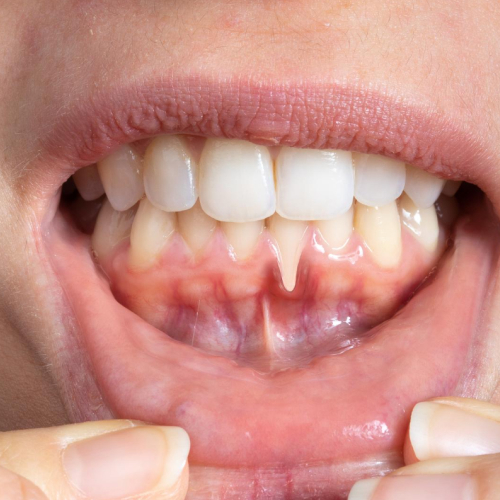
Gum tissue is programmed to maintain a specific distance — typically 2 to 3mm — from the underlying bone. This is called the biological width. When a dentist removes excess gum tissue without also adjusting the bone beneath it, the body treats that gap as a problem to solve. Over the following months, the gum gradually creeps back down to restore that biological distance. To the patient, it looks like the procedure failed. In reality, the tissue is doing exactly what it's designed to do.
This is the critical difference between two procedures that often get confused:
According to WebMD, gum contouring may be performed alongside crown lengthening and pocket reduction procedures — and in those medically-indicated cases, the bone is addressed as part of the process.
Before your procedure, ask your specialist directly: "Will bone sounding or osseous contouring be part of my treatment plan?" If the answer is no and your gummy smile has a skeletal component, you deserve to understand why — and what that means for longevity.
Here's a scenario that catches many patients off guard. The surgery goes perfectly. Results look great. Then, 12 to 18 months later, the gums appear overgrown again. The procedure didn't fail — a prescription did.
Certain medications cause a condition called gingival hyperplasia, where gum tissue proliferates beyond its normal boundaries. A Healthline overview of gum contouring notes that specific health conditions and prescription drugs are known contributors to excess gum growth. The most common offenders include:
This matters especially for patients over 50, or anyone managing chronic cardiovascular or neurological conditions. If you're on one of these medications, gum contouring may still be an option — but your specialist needs to factor your full medical history into the treatment plan. In some cases, coordinating with your physician to explore alternative medications before surgery can protect your cosmetic results long-term.
The takeaway: gum contouring addresses the tissue, not the trigger. If the trigger is systemic, results will need ongoing monitoring. Patients with a history of gum disease or gingivitis should be especially diligent about disclosing their full health history before pursuing any gum procedure.
A large number of patients considering gum contouring are finishing orthodontic treatment. After months of braces or clear aligners, the smile is straighter — but the gumline still looks uneven or excessive. Understandably, the instinct is to address it immediately.
Doing so too early is one of the most common reasons patients feel their results "shifted."
After orthodontic appliances are removed, teeth go through a period of passive eruption and settling. The tooth position isn't fully stable yet. If gum contouring is performed during this window, the gumline is sculpted to match a tooth position that's still changing. As the teeth finish settling — sometimes over three to six months — the relationship between tooth and gum shifts, creating the appearance of regrowth or unevenness.
Research published in PMC confirms that gingival margin position is directly tied to the position and movement of the underlying tooth structure, which reinforces why timing matters.
Waiting three to six months post-braces before scheduling gum contouring ensures your specialist is working with a stable, final tooth position. It reduces the chance of needing a touch-up procedure and produces more predictable results. This is true whether you completed treatment with traditional teeth straightening braces or clear aligner systems like Invisalign.
When the cause is purely cosmetic — excess gum tissue due to altered passive eruption, with no medication triggers and no orthodontic movement still underway — gum contouring results are considered long-lasting and, in many cases, permanent. A Healthline overview of gum contouring notes that gingivectomy results are likely to be long-lasting or even permanent when the procedure is appropriate for the underlying cause.
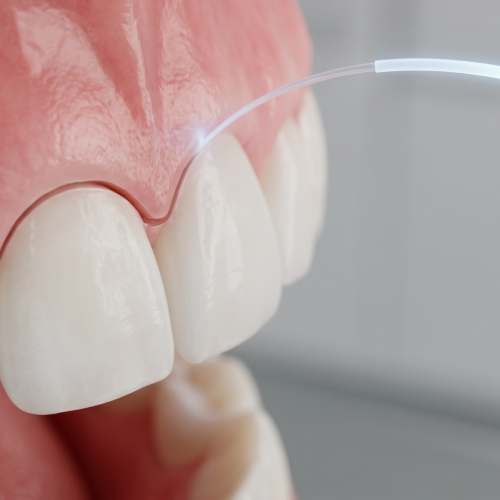
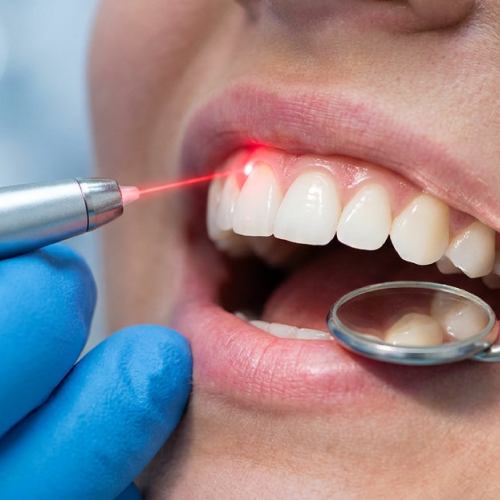
The procedure itself is performed in-office, typically in one to two hours, under local anesthesia. Modern laser techniques have made recovery faster and more comfortable than traditional scalpel methods. According to a Healthline overview of laser gum surgery, lasers minimize bleeding, reduce post-operative discomfort, and sterilize the treatment area simultaneously — advantages that matter during recovery.
Recovery generally spans a few days to a few weeks depending on the extent of contouring. Soft foods, gentle rinsing, and avoiding strenuous activity in the first day or two are standard guidance.
Permanence, ultimately, is a function of three things: the right diagnosis, the right technique, and no ongoing systemic factors working against the result. That's why a thorough consultation — not just a cosmetic evaluation — is the real first step. Maintaining results long-term also depends on consistent dental cleaning and exam visits to monitor gum health over time.
At Dental Specialists of Riverside, our team takes a comprehensive approach to gum contouring — evaluating not just how your smile looks, but the biological and medical factors that determine whether results will last. Serving patients throughout Riverside and the greater Inland Empire, we're here to give you honest, specialist-level guidance before you commit to any procedure. Schedule a consultation today.
Medical disclaimer: This article is intended for informational purposes only and does not constitute medical or dental advice. Individual results vary. Consult a qualified dental professional to determine the most appropriate treatment for your specific needs.
Fresh news from the dental world


Mon, Tues, Thur 9AM - 6PM
Weds 10AM - 7PM
Friday 8AM - 5PM
Sat & Sun Closed
Check out what our patients are saying in Riverside...


“What a Difference...”
“My wife and I recently decided to try teeth whitening here. Wow! What a difference. Thank you!”

“So Comfortable...”
"I have been coming here for years and I love this place. I feel so comfortable whenever I go into ortho. Everyone's really friendly! The ladies at the front desk are my favorite, they're always so helpful and always try their best to work around my schedule. Would definitely recommend!"

“Expert Care...”
“I have come a long way with all my dental issues. I’ve been able to take back control of my dental health because of the expert care I’ve received over the years at Dental Specialists of Riverside. I highly recommend this place because they won’t pressure you into stuff that you don’t need or that you are not ready for.”
..png)
“Never Disappointed...”
“I don’t have much time to waste, so I always get my whitening done by the good folks at Dental Specialists of Riverside. Never disappointed.”
“What a Difference...”
“My wife and I recently decided to try teeth whitening here. Wow! What a difference. Thank you!”
“So Comfortable...”
"I have been coming here for years and I love this place. I feel so comfortable whenever I go into ortho. Everyone's really friendly! The ladies at the front desk are my favorite, they're always so helpful and always try their best to work around my schedule. Would definitely recommend!"
Check out our accreditations, sources, and relationships in the wide world of dentistry...
..png)
..png)
..png)
Check us out and follow our Riverside, CA practice on social media...


..png)